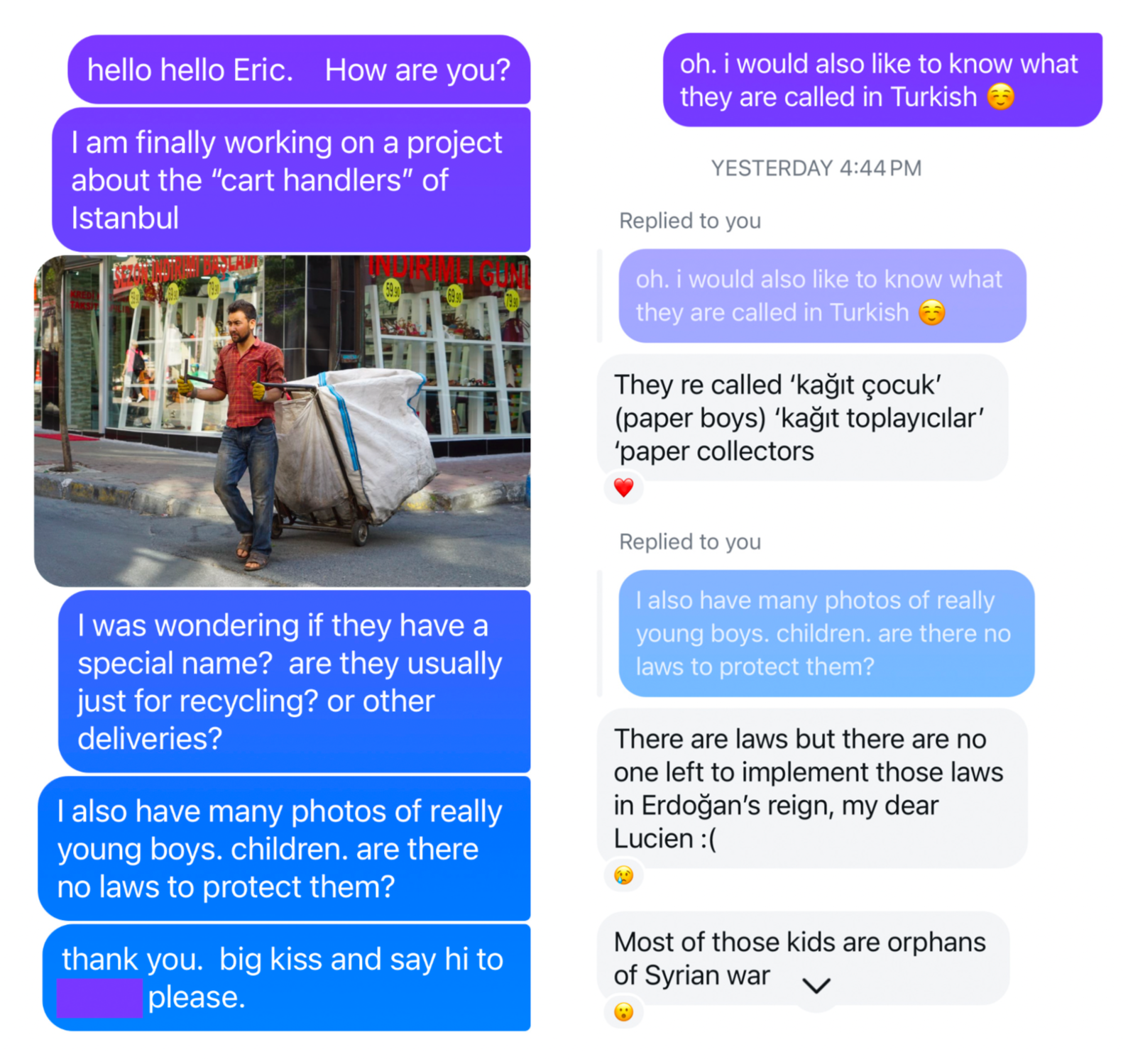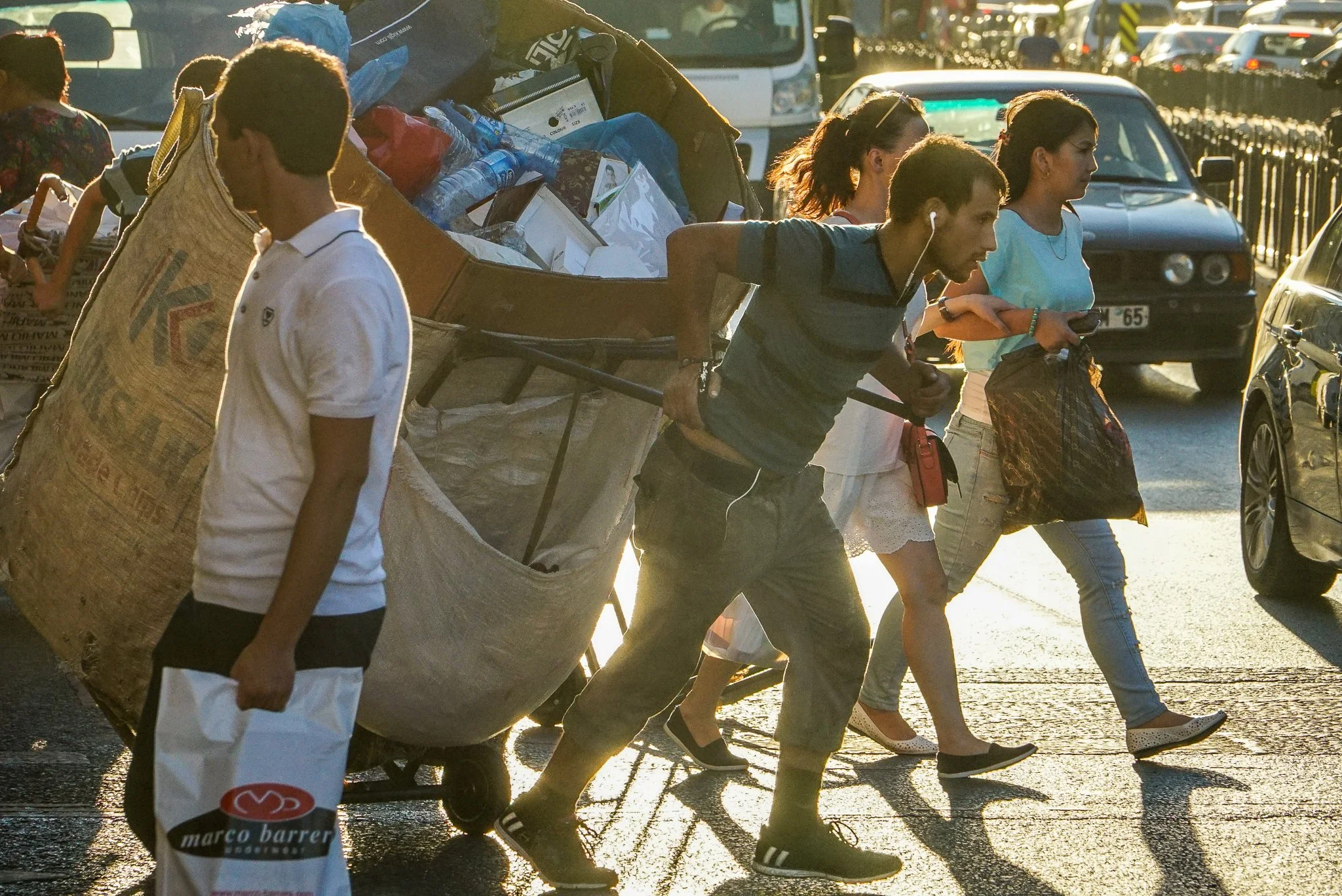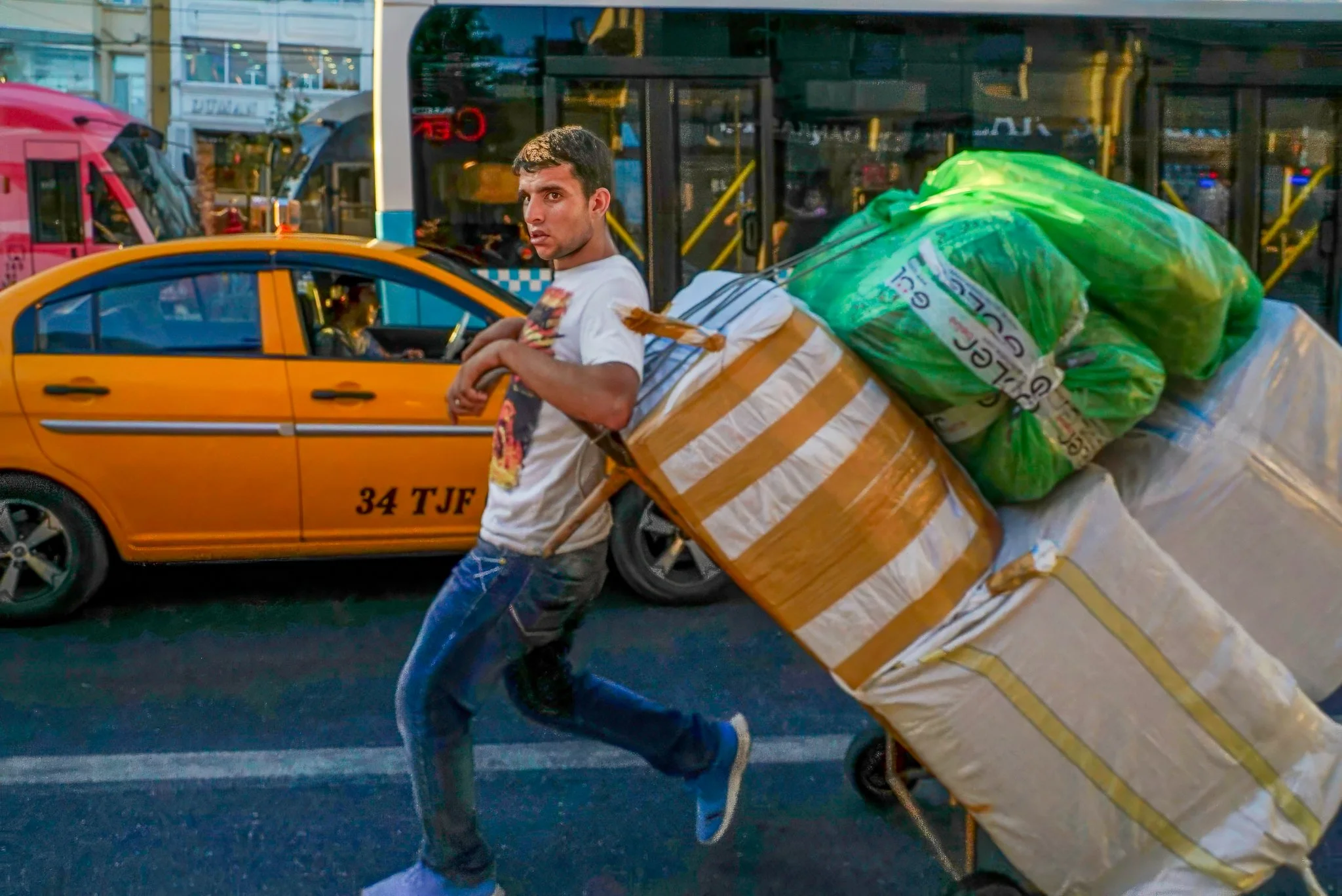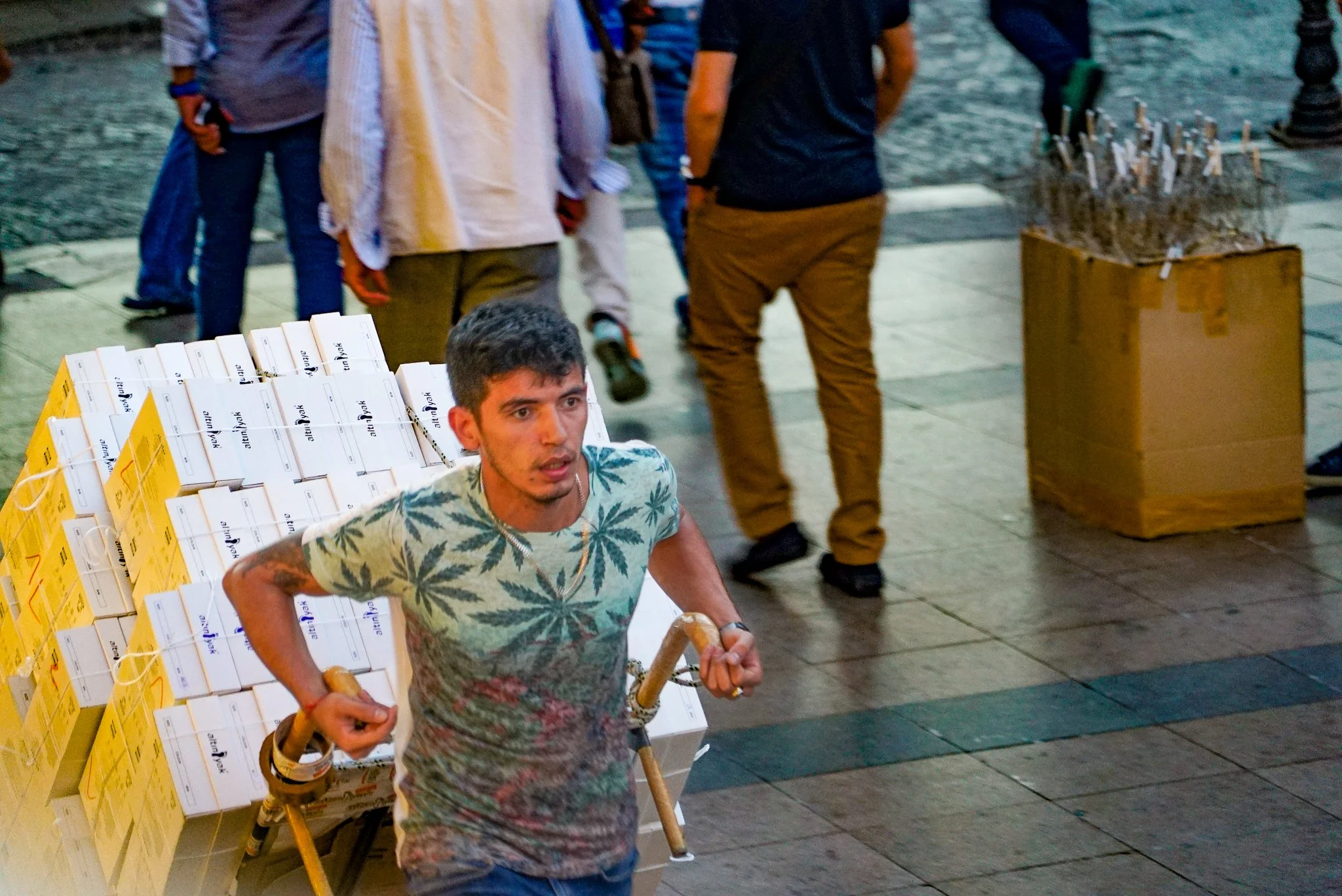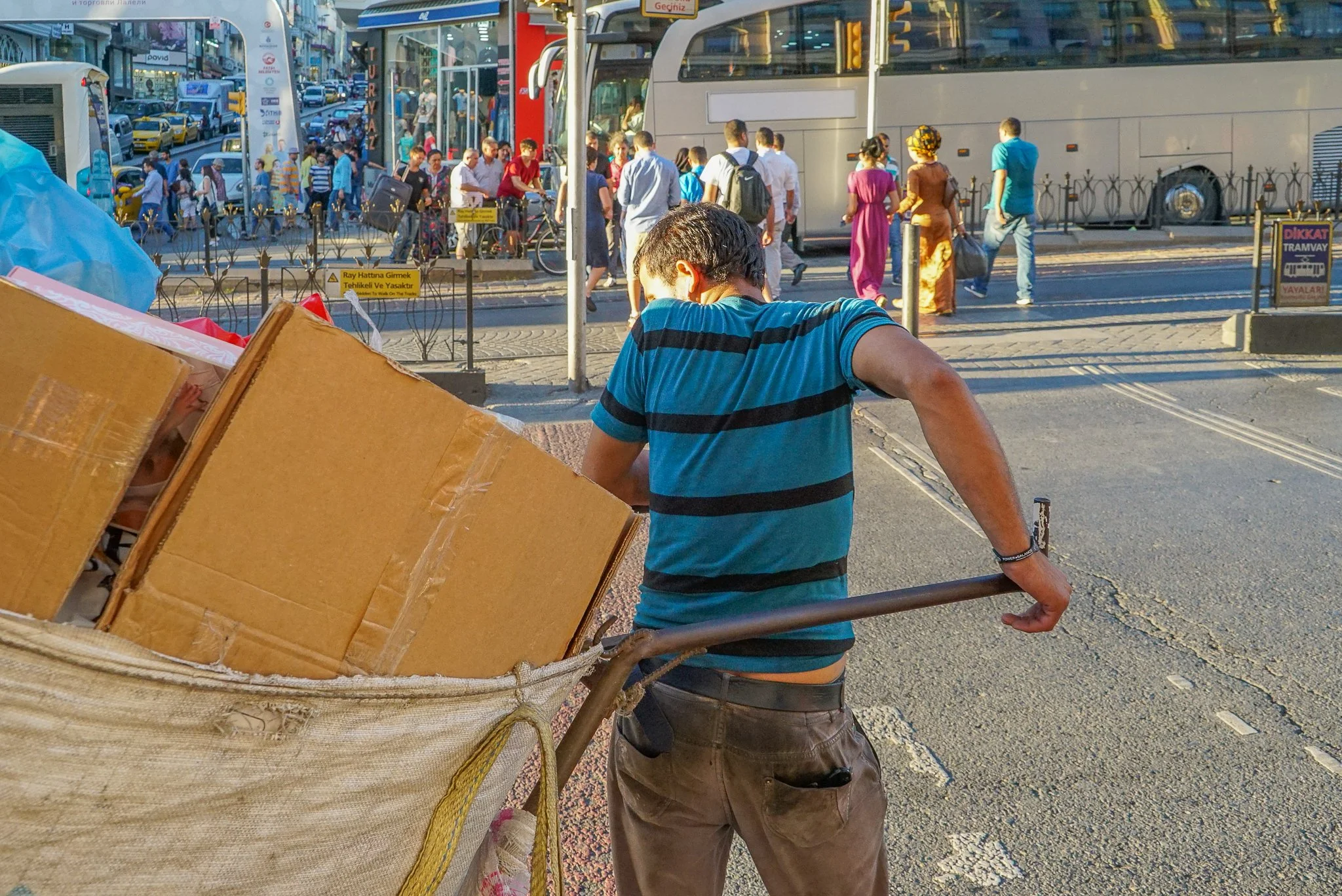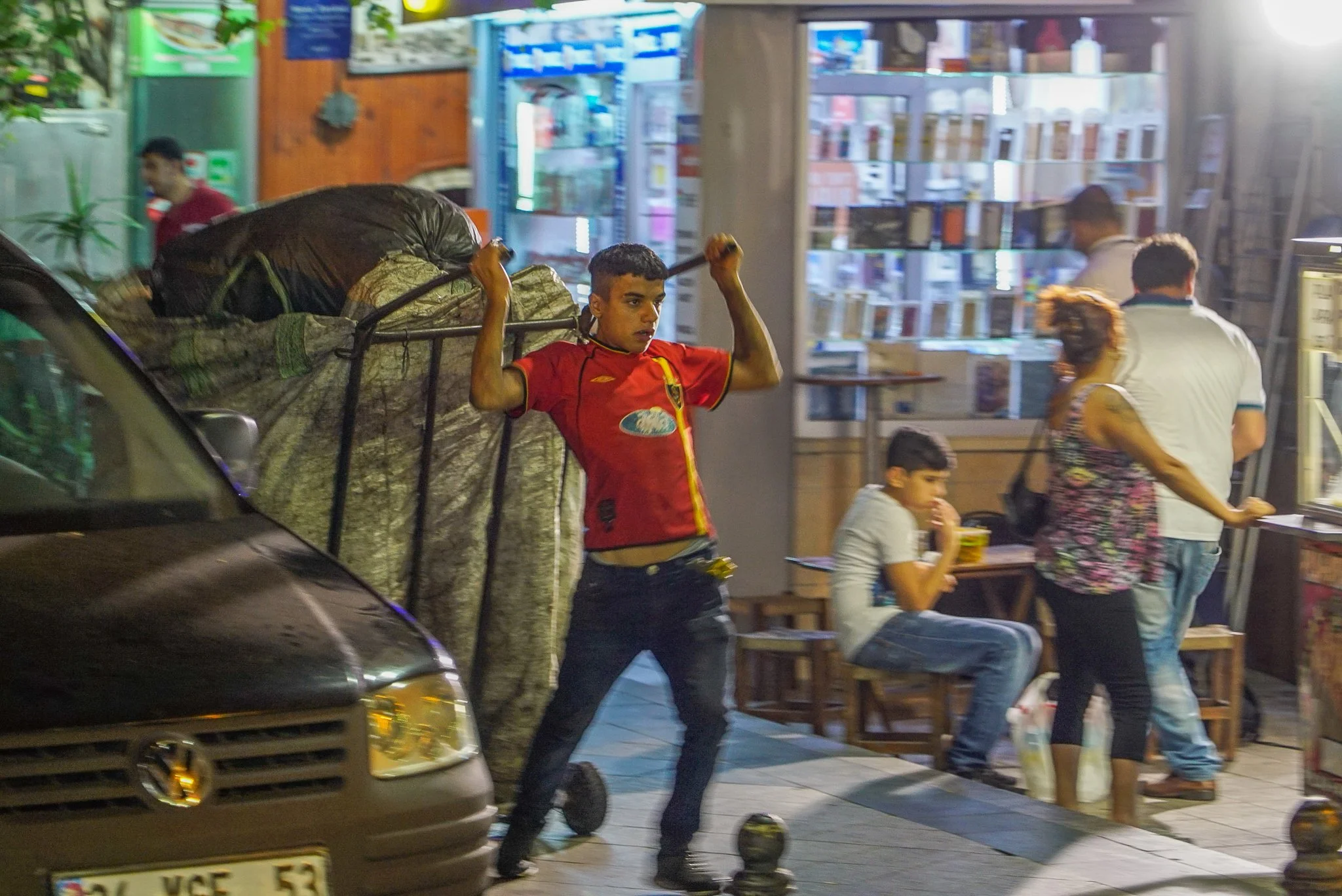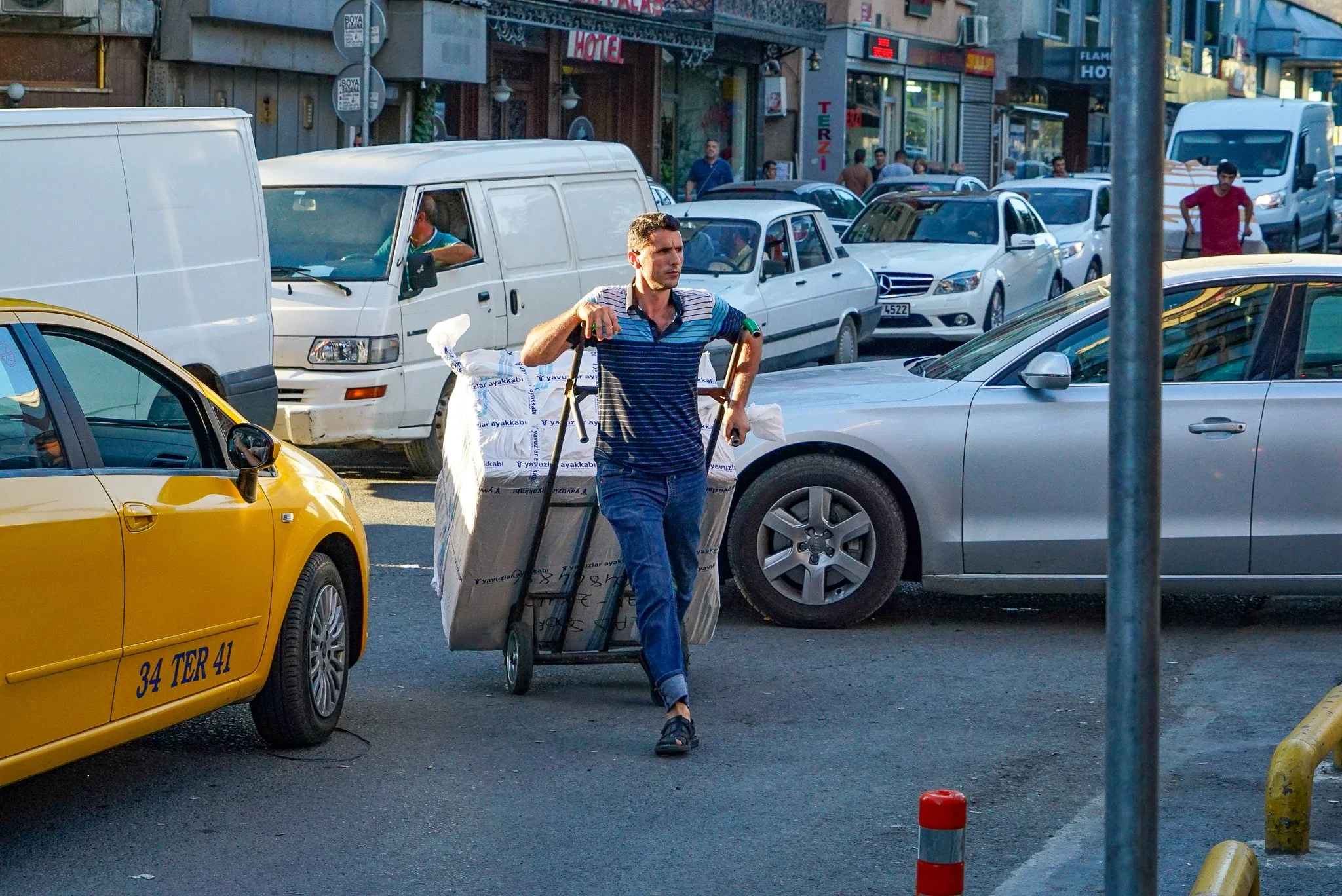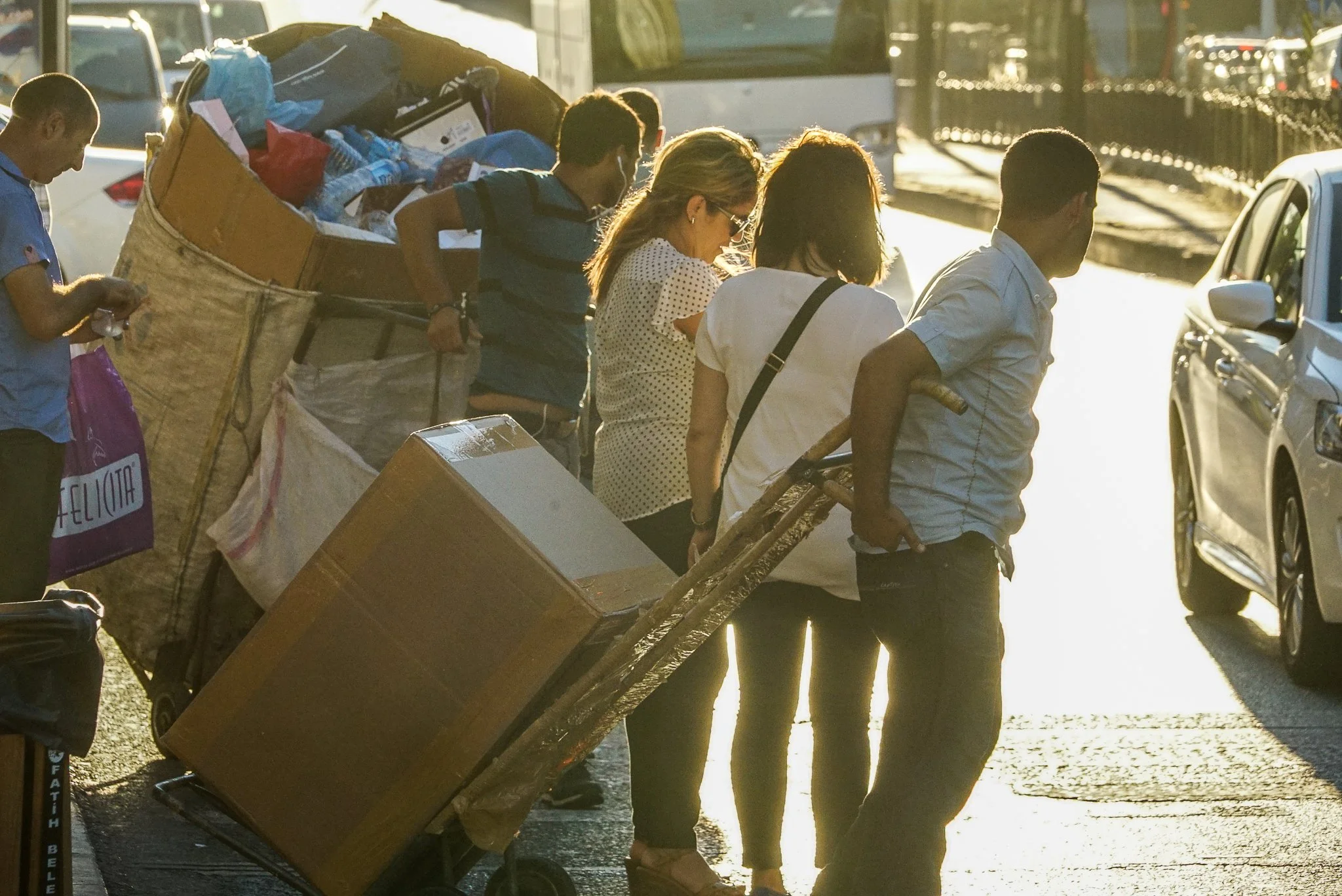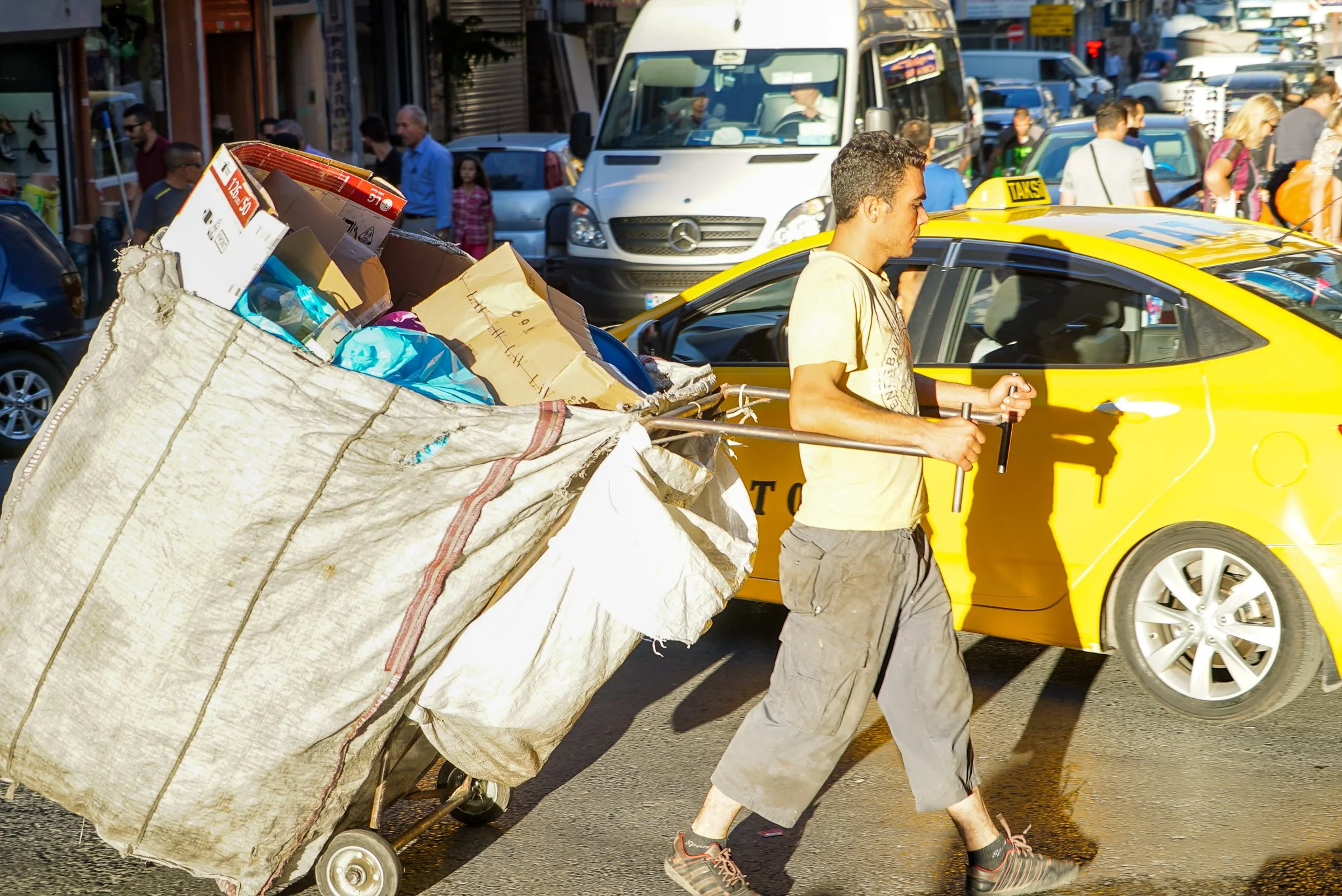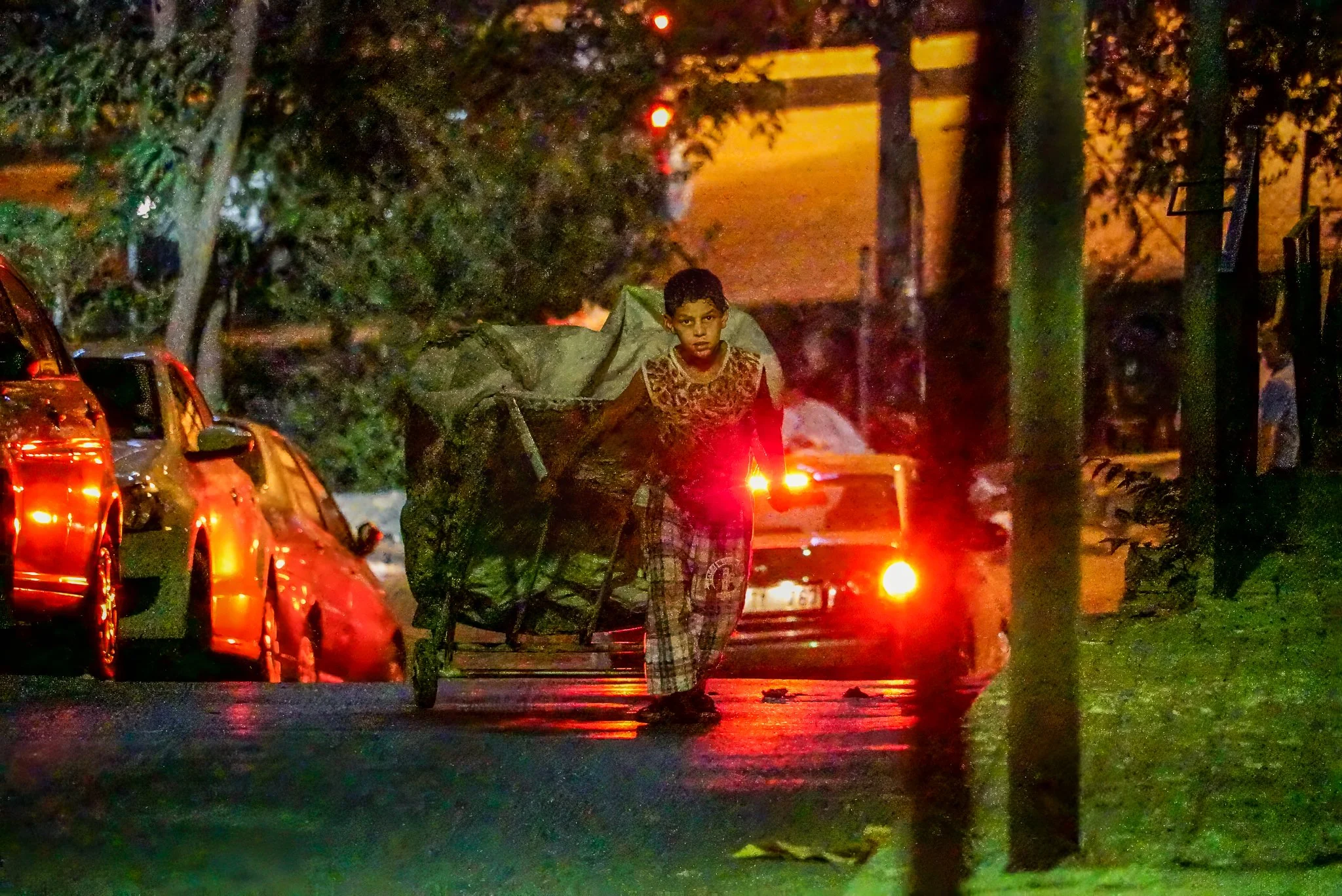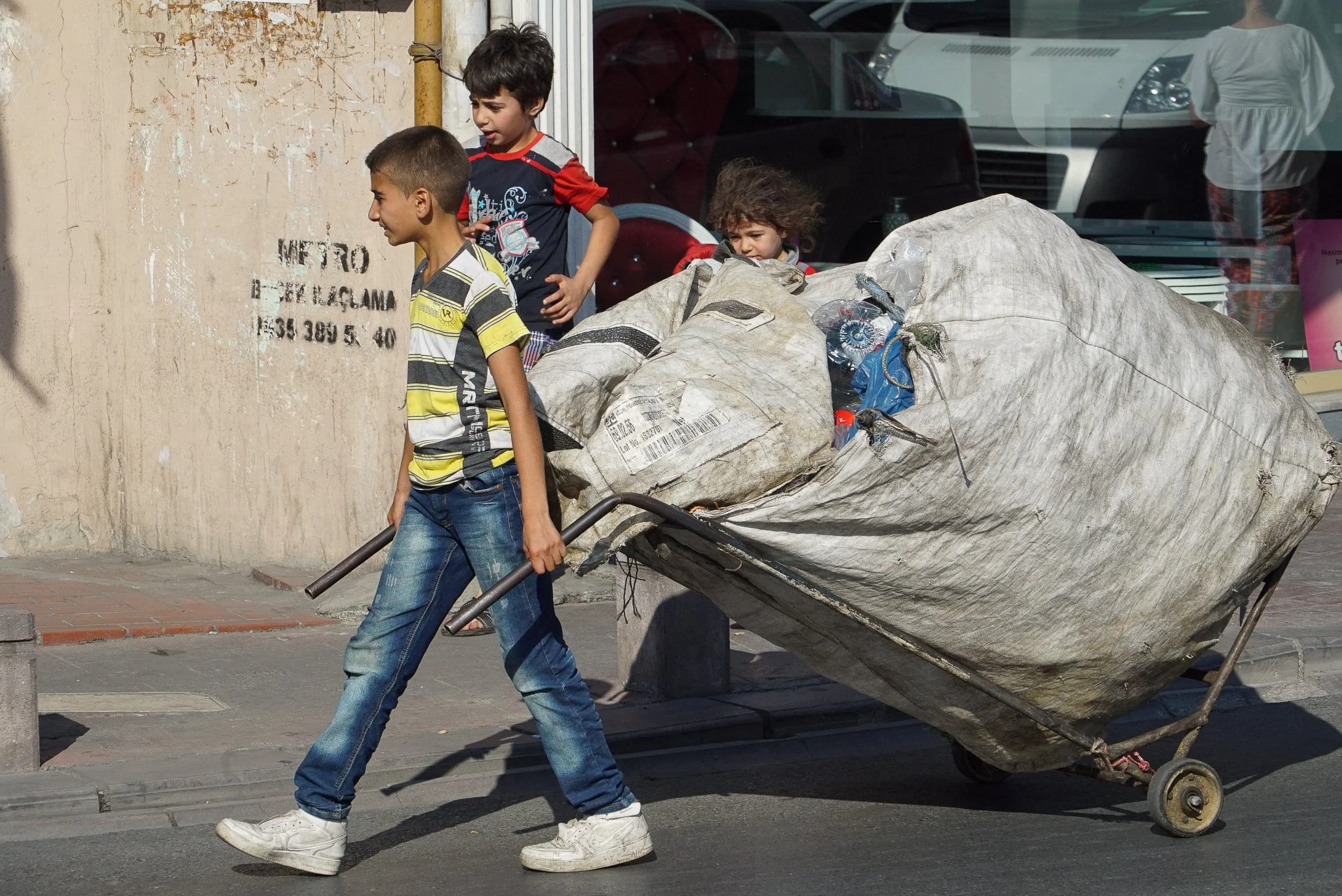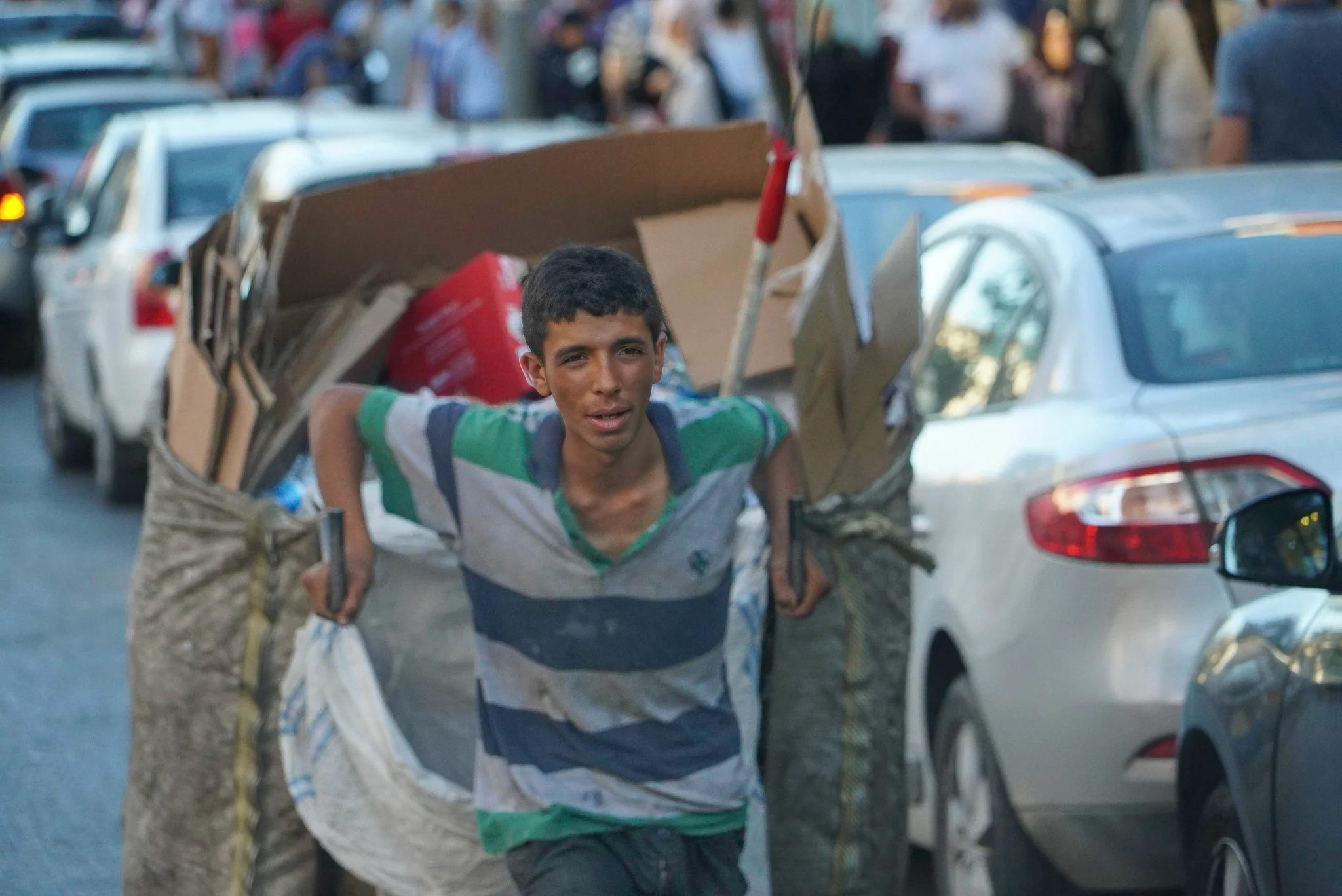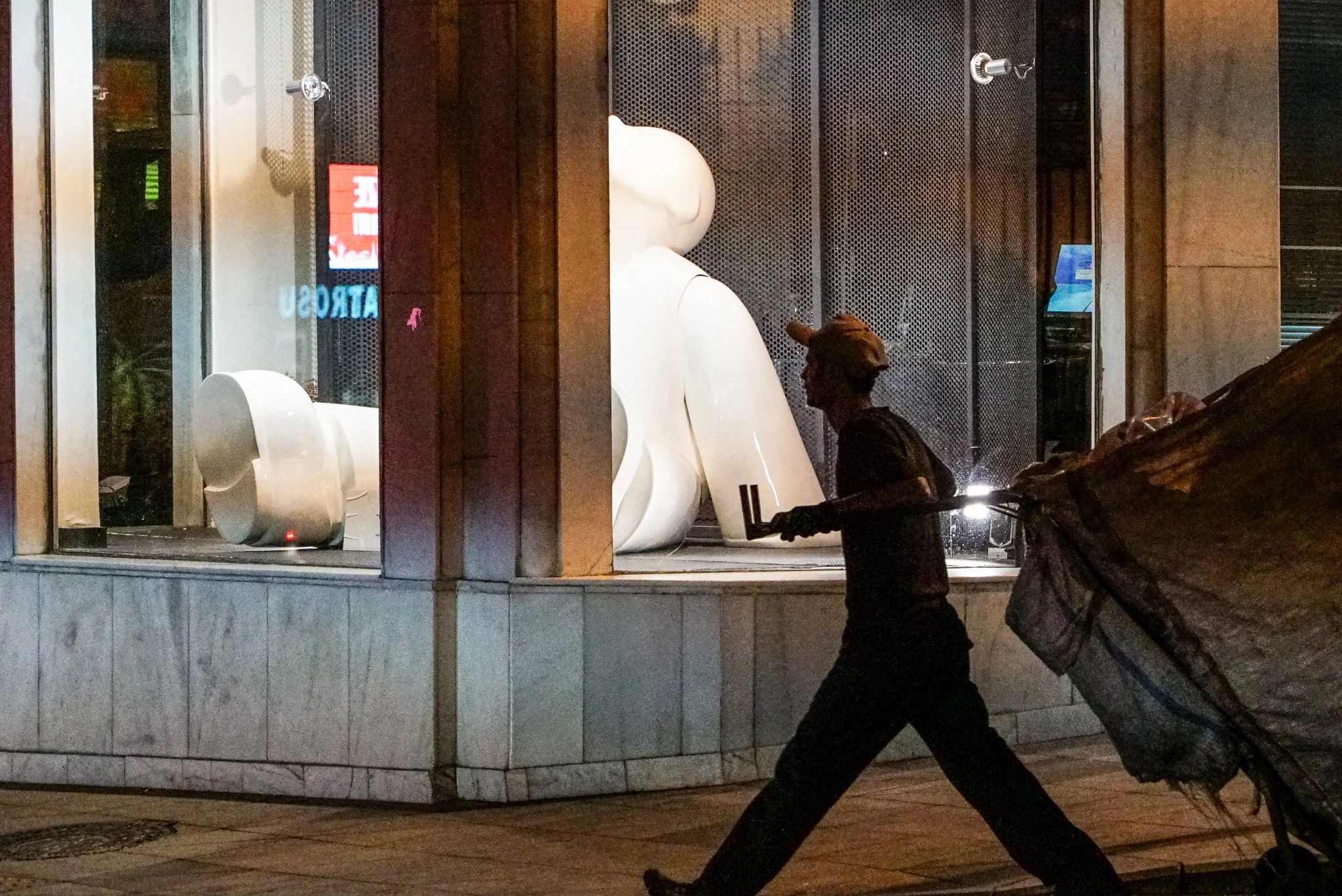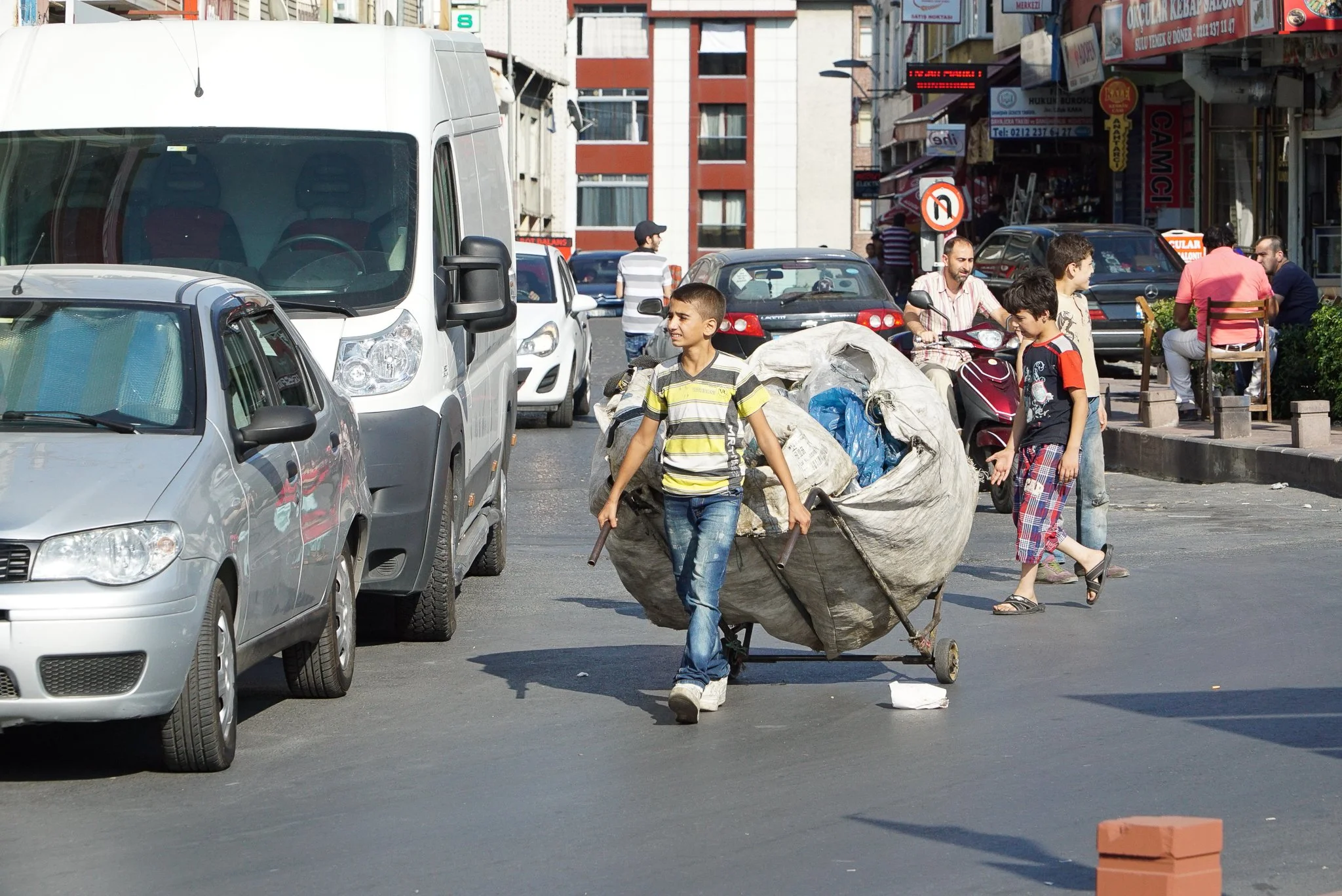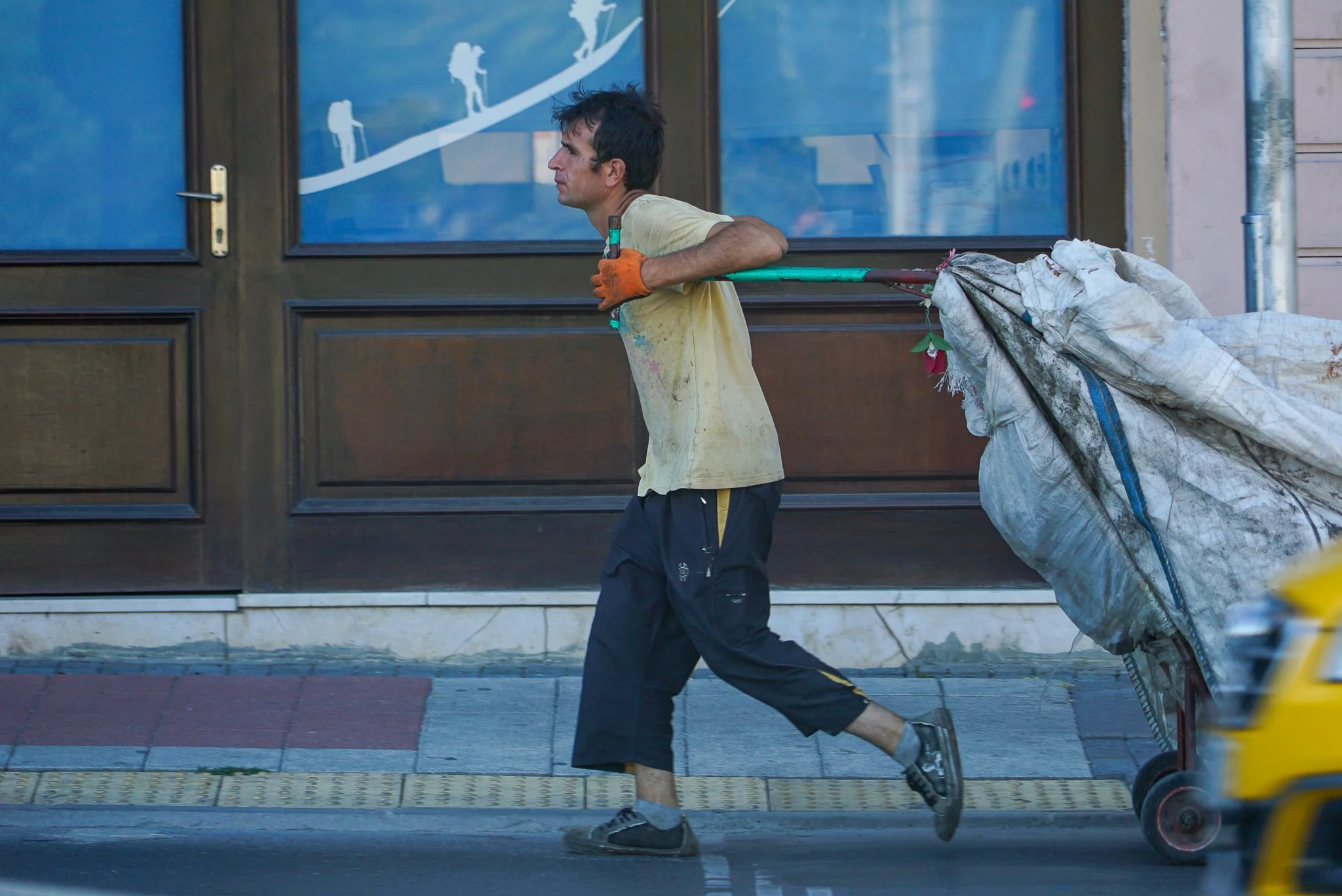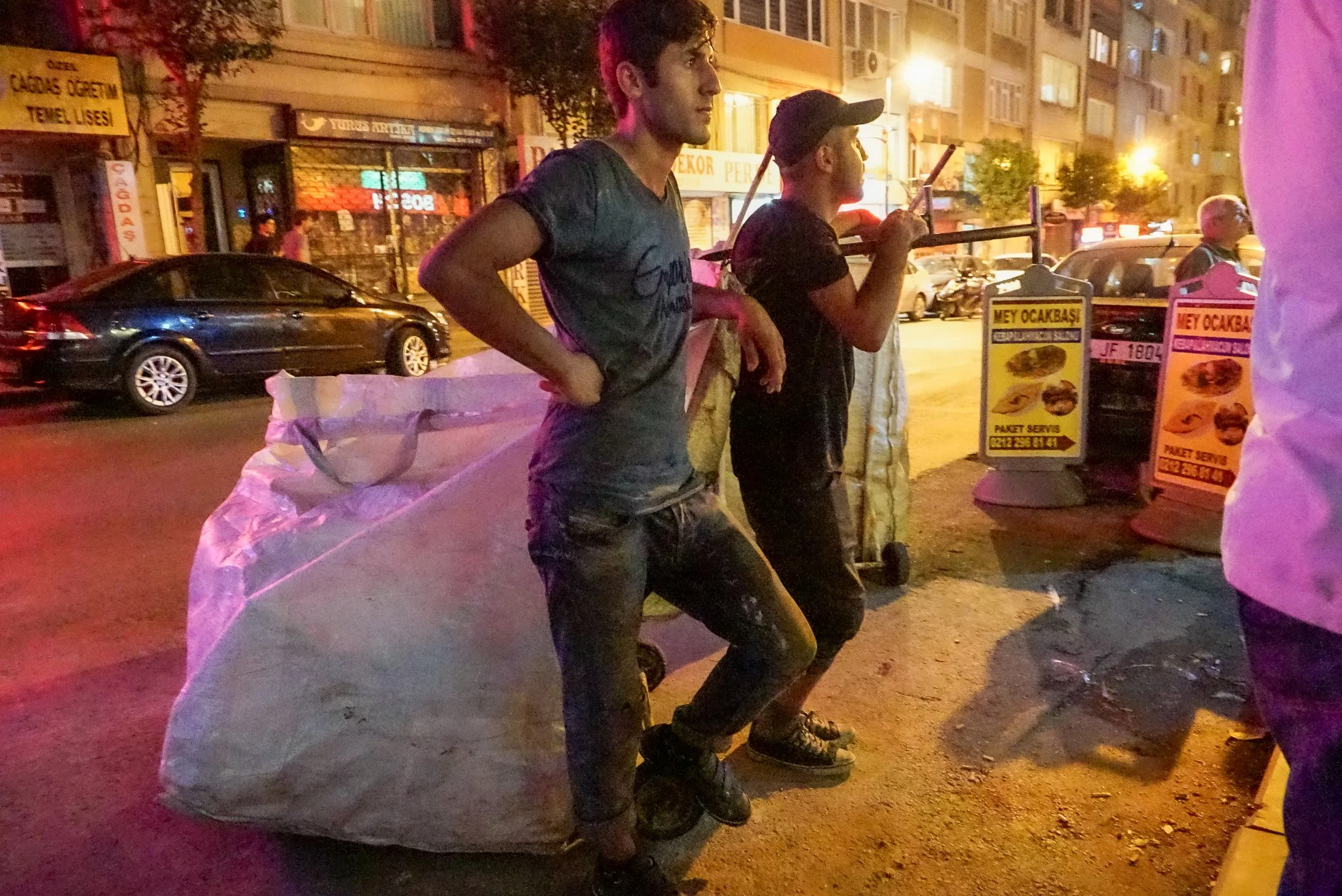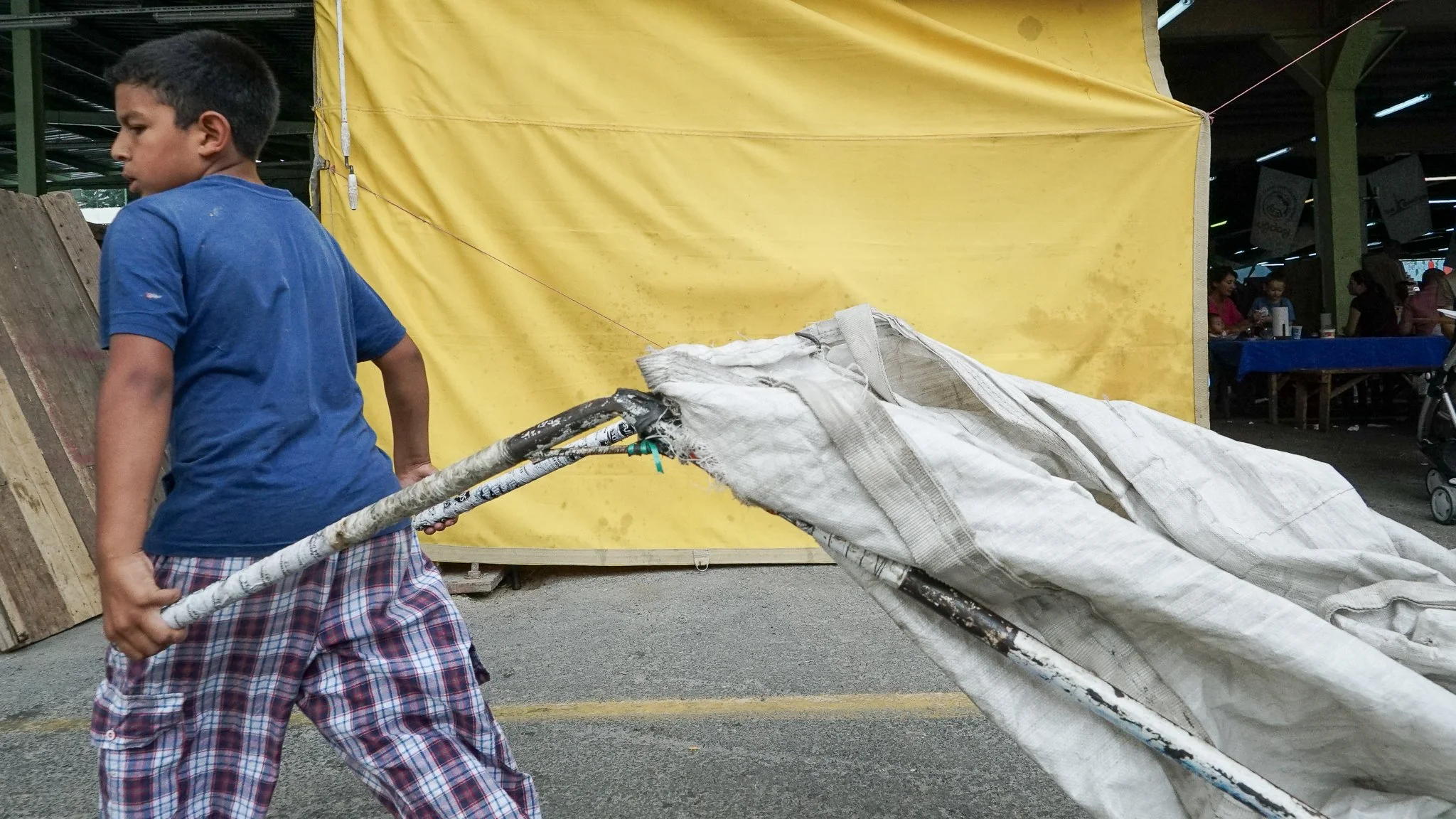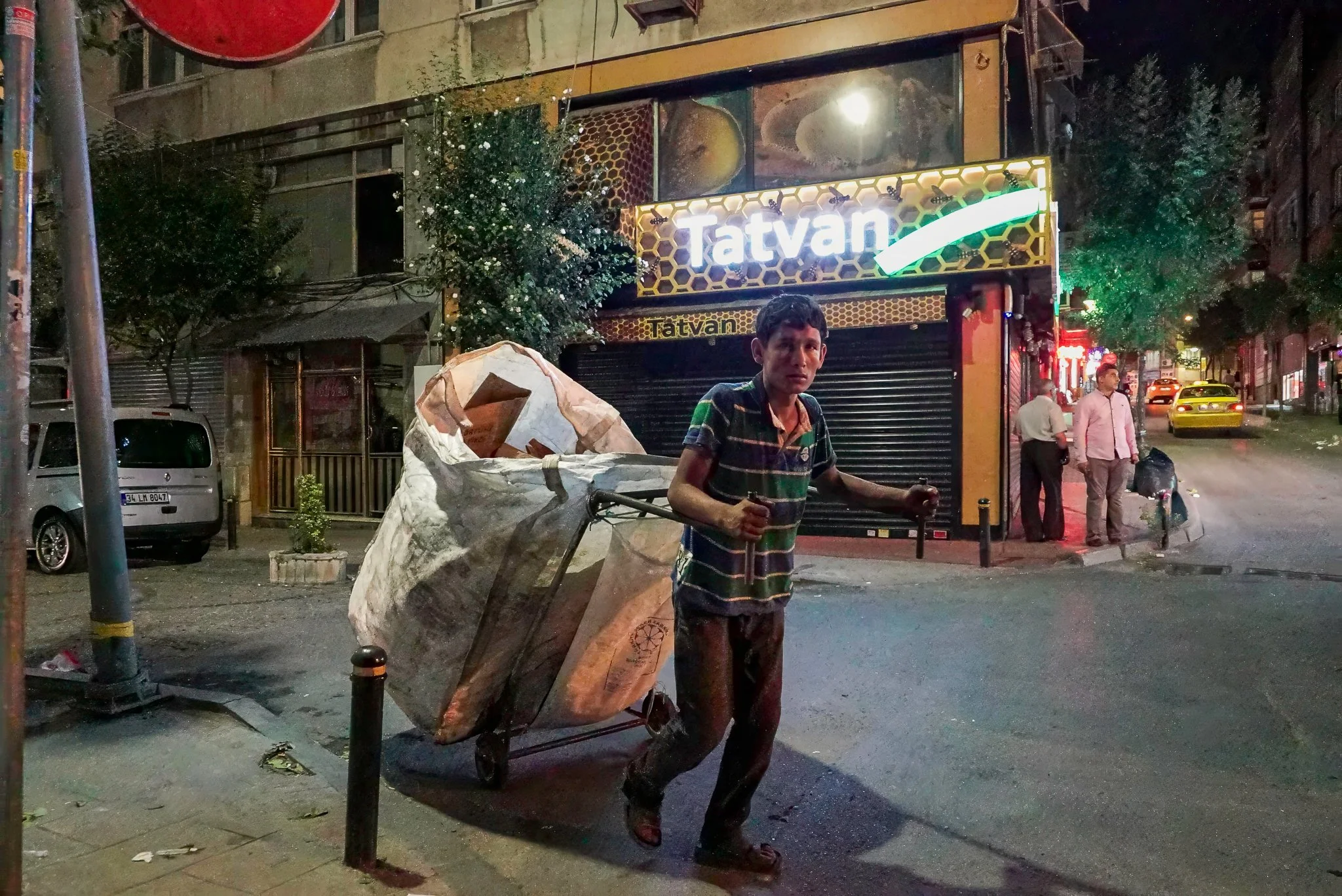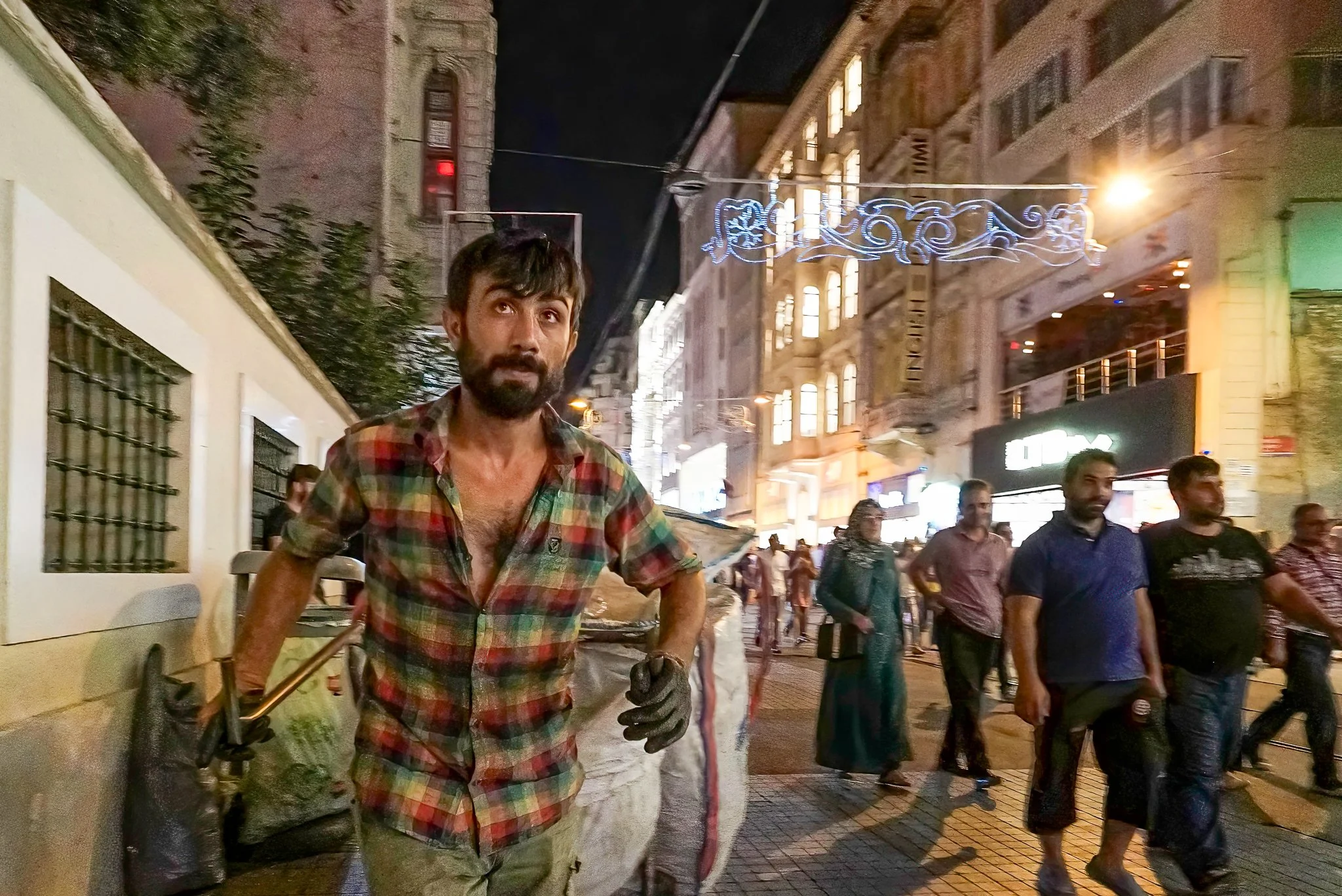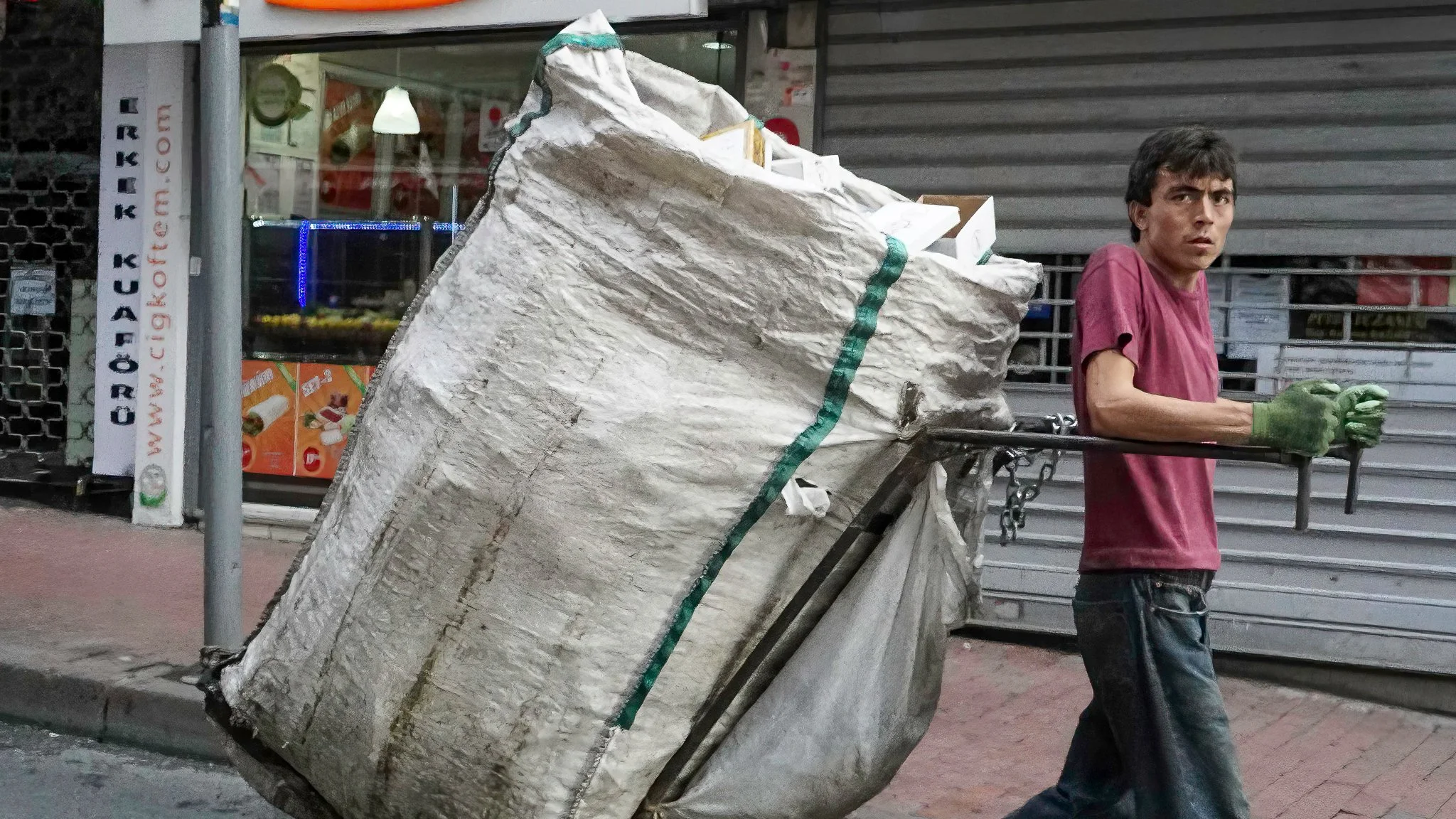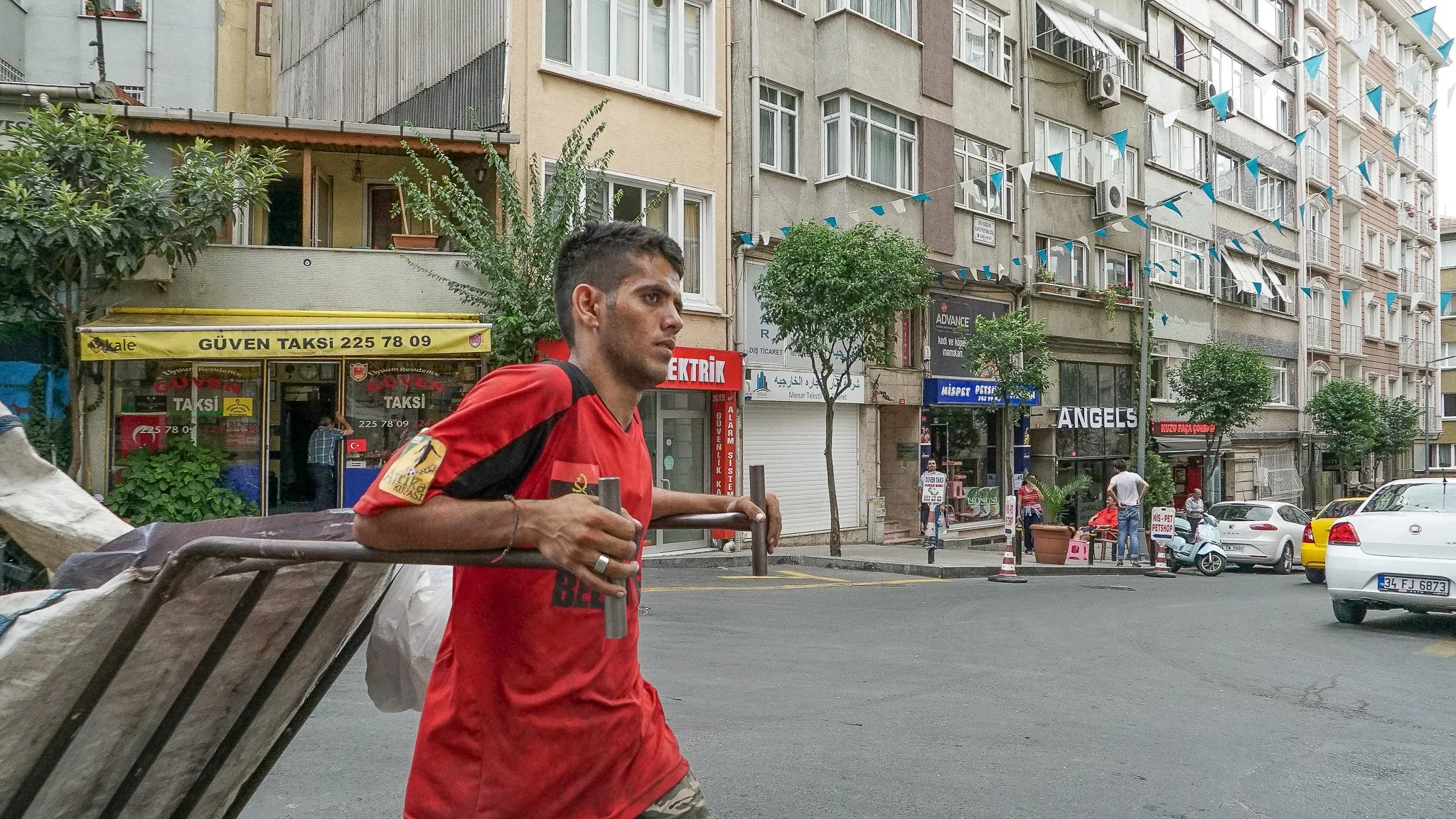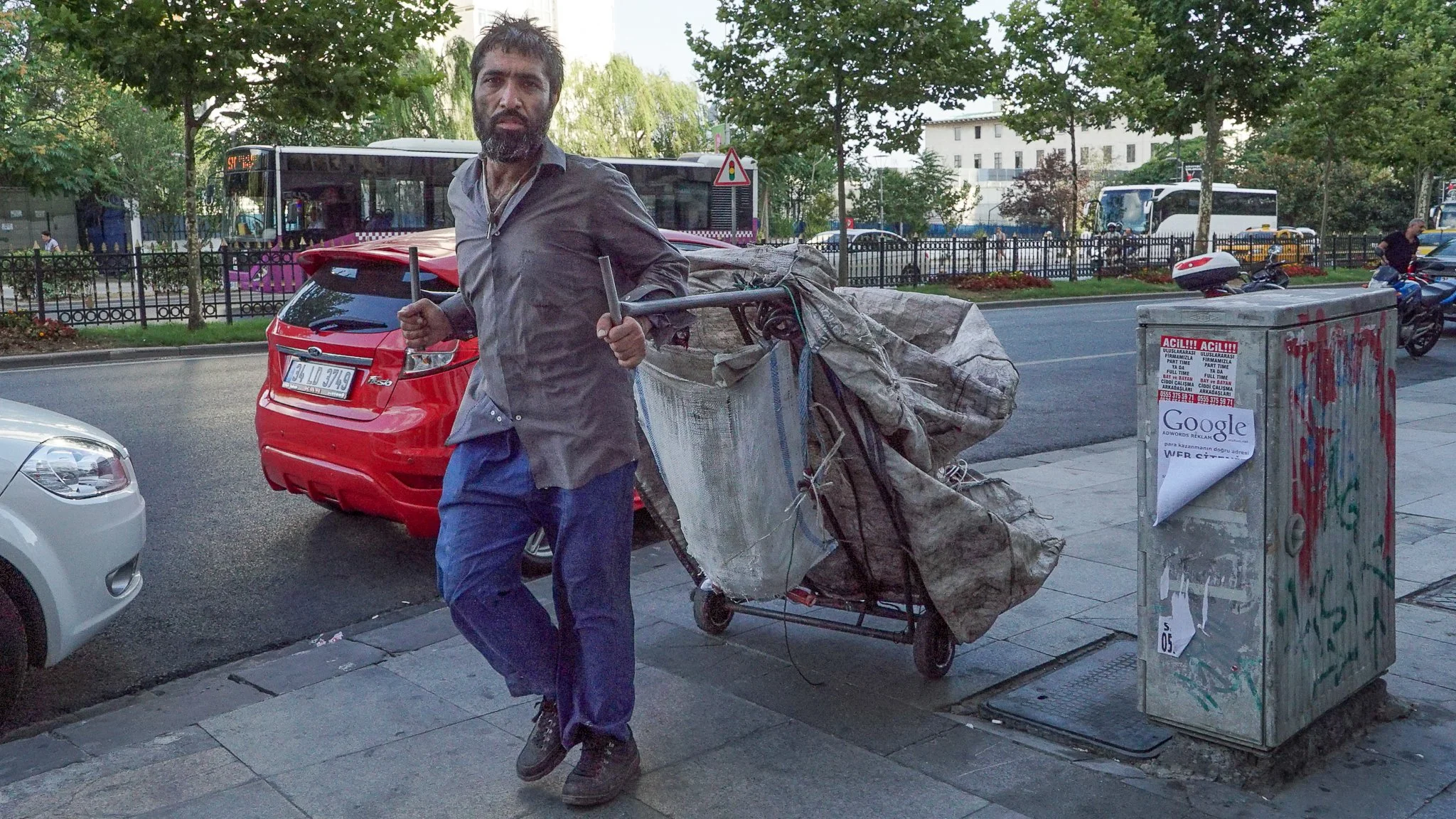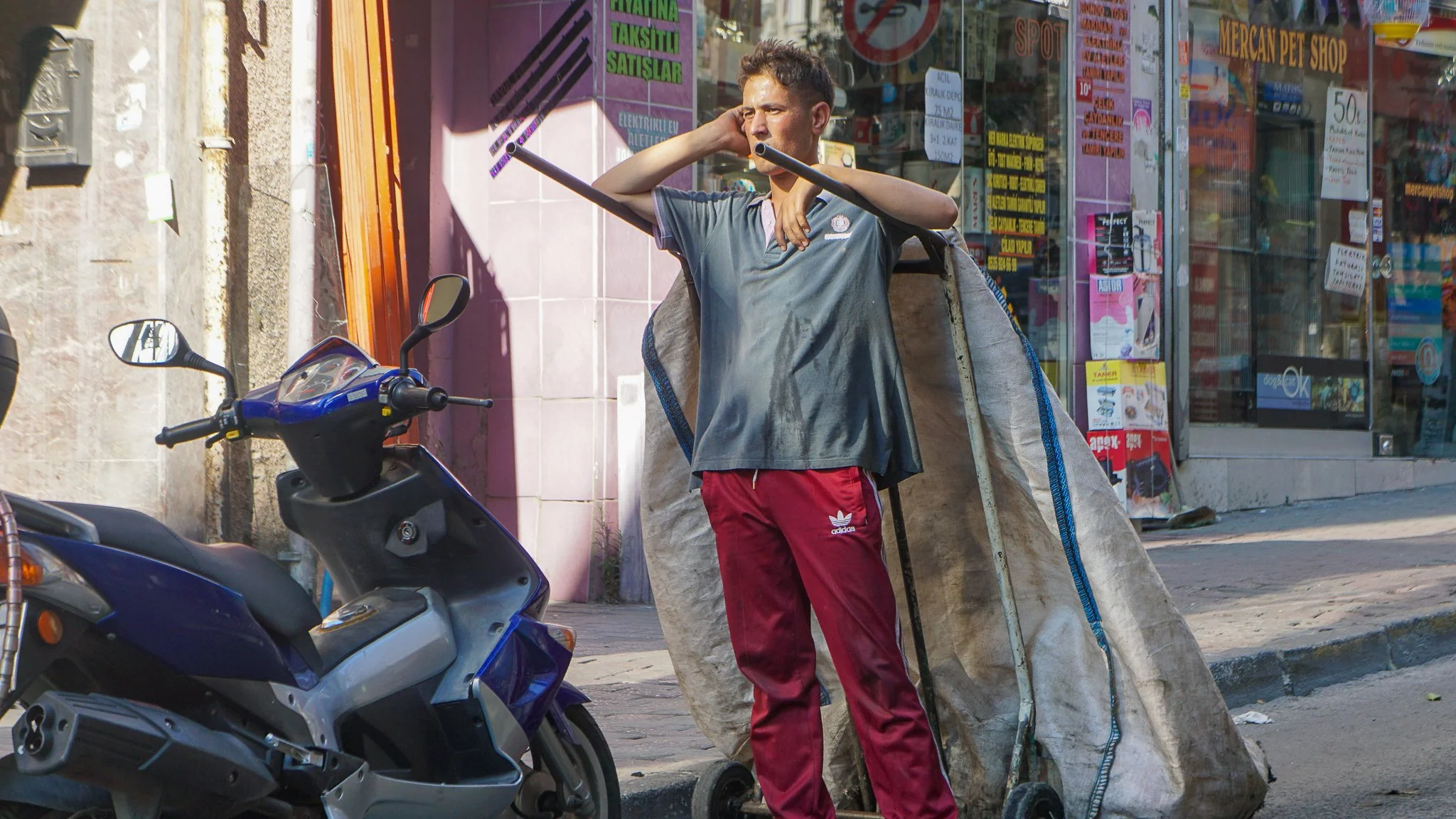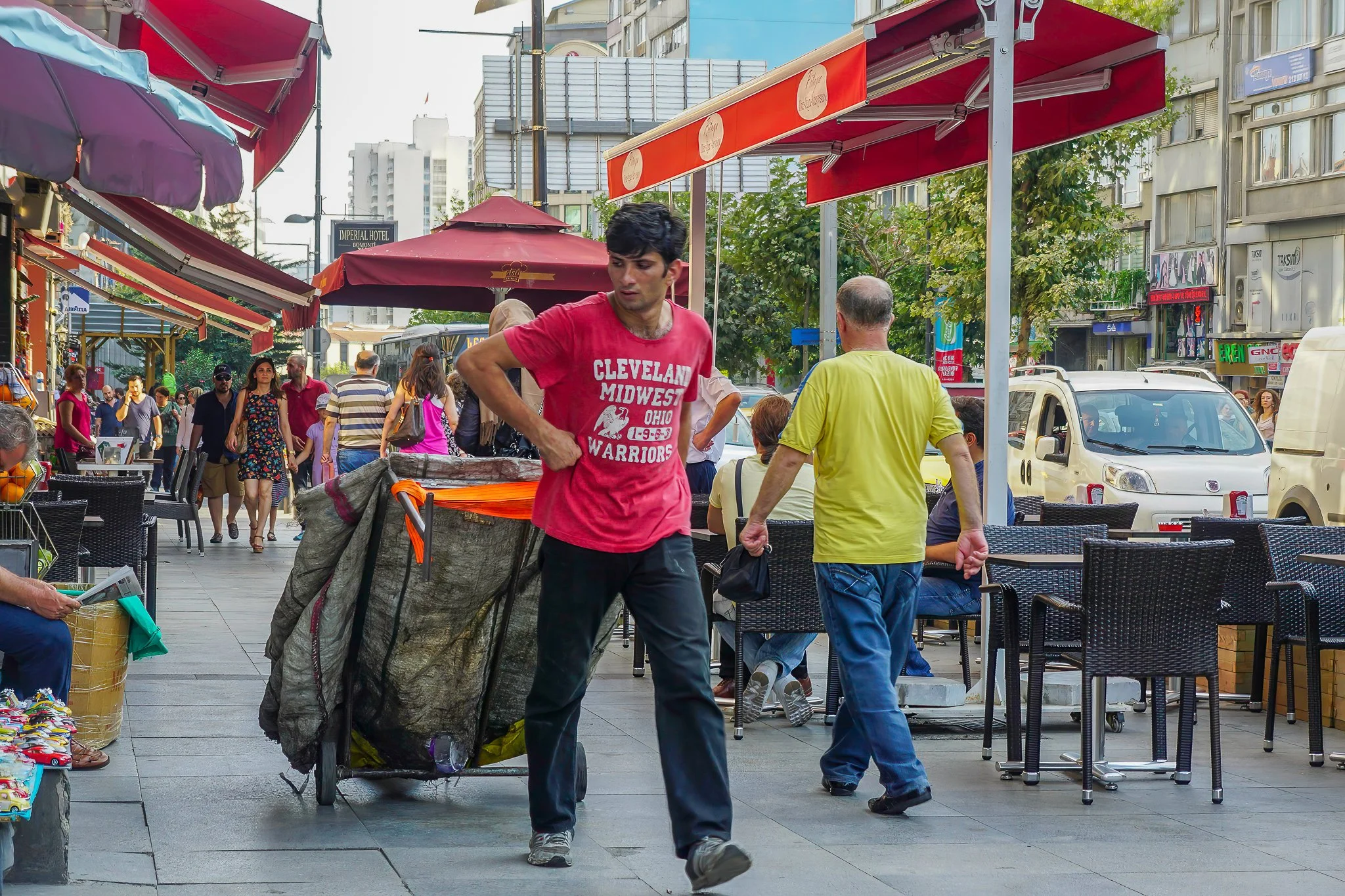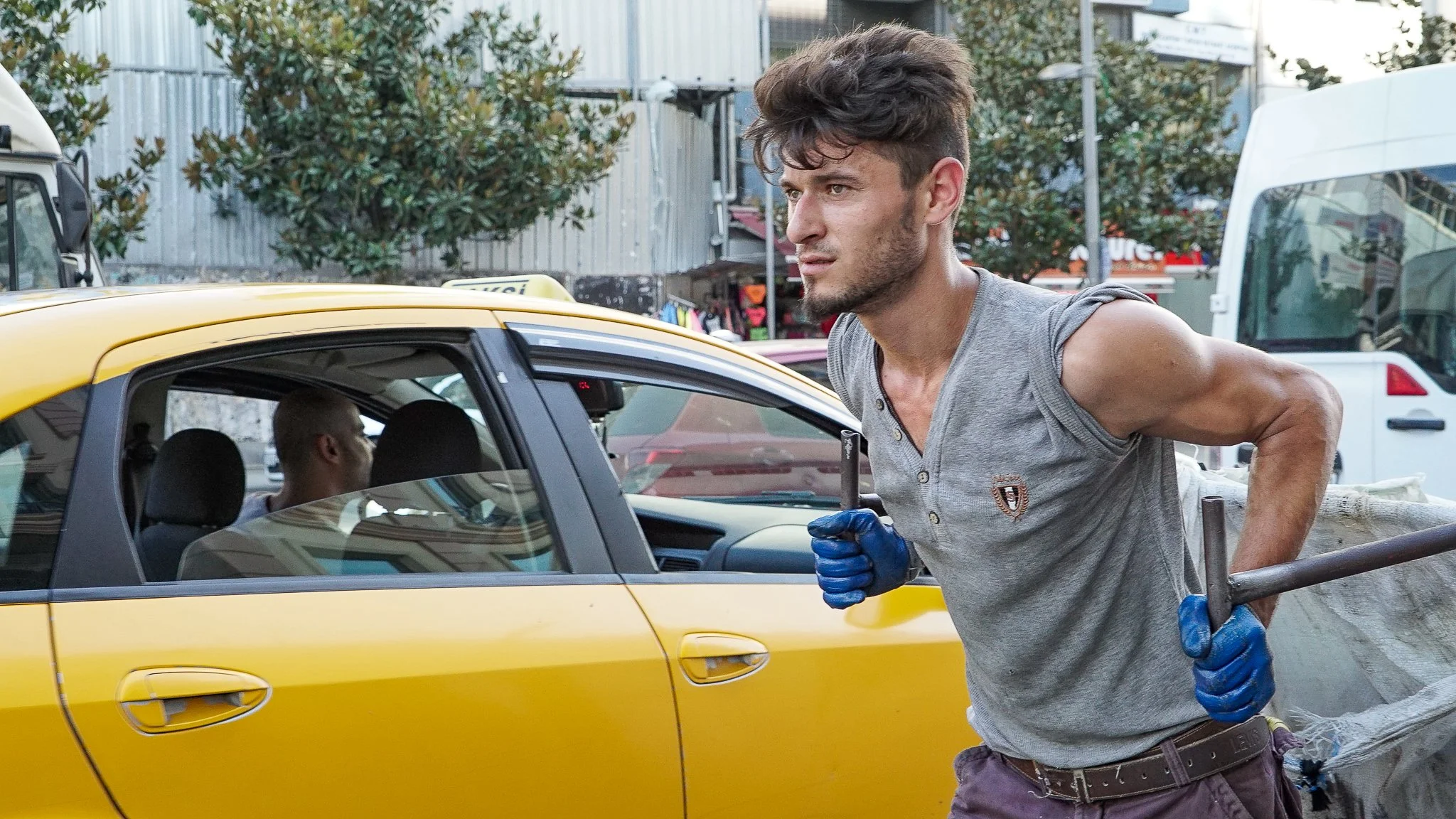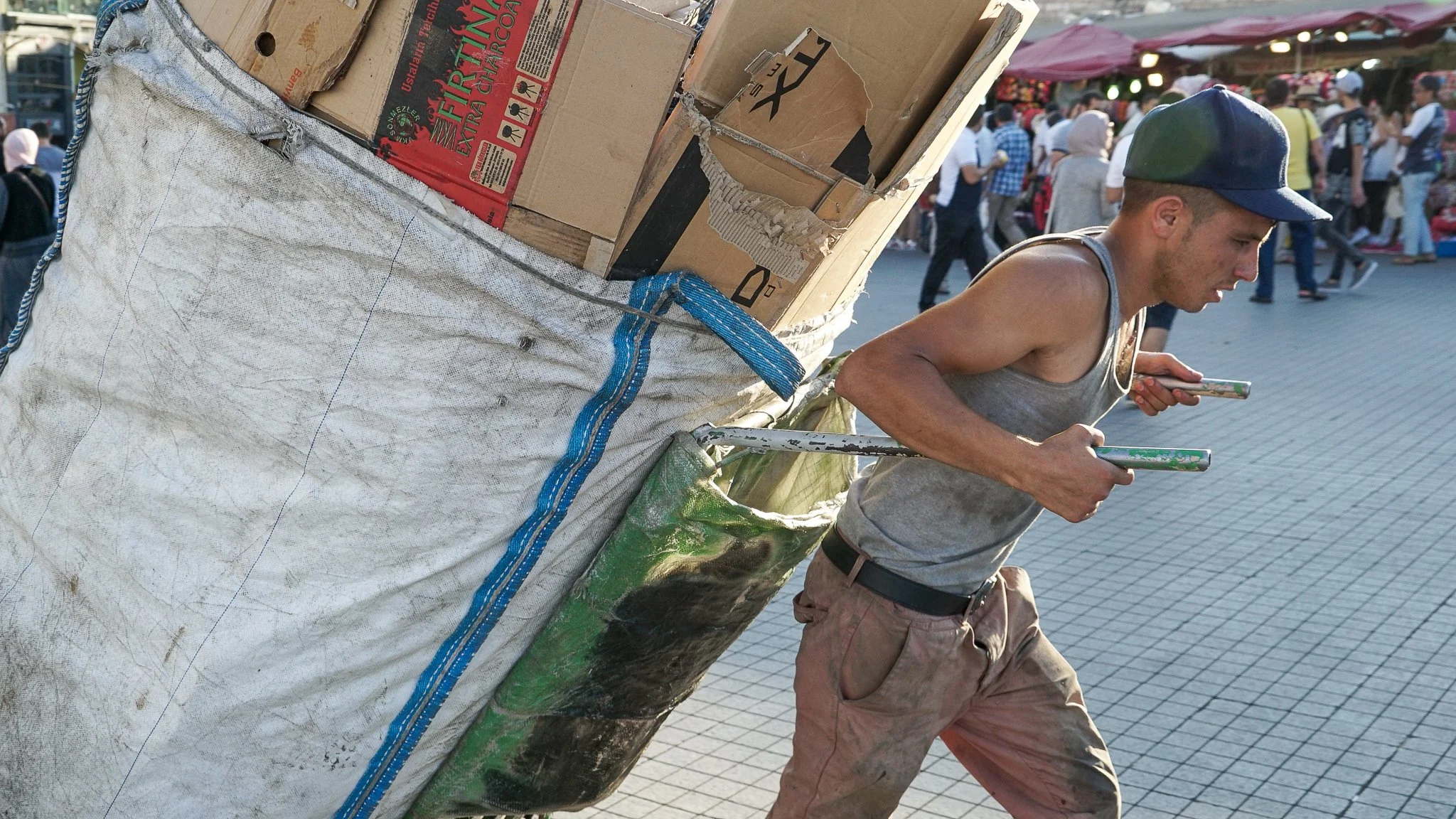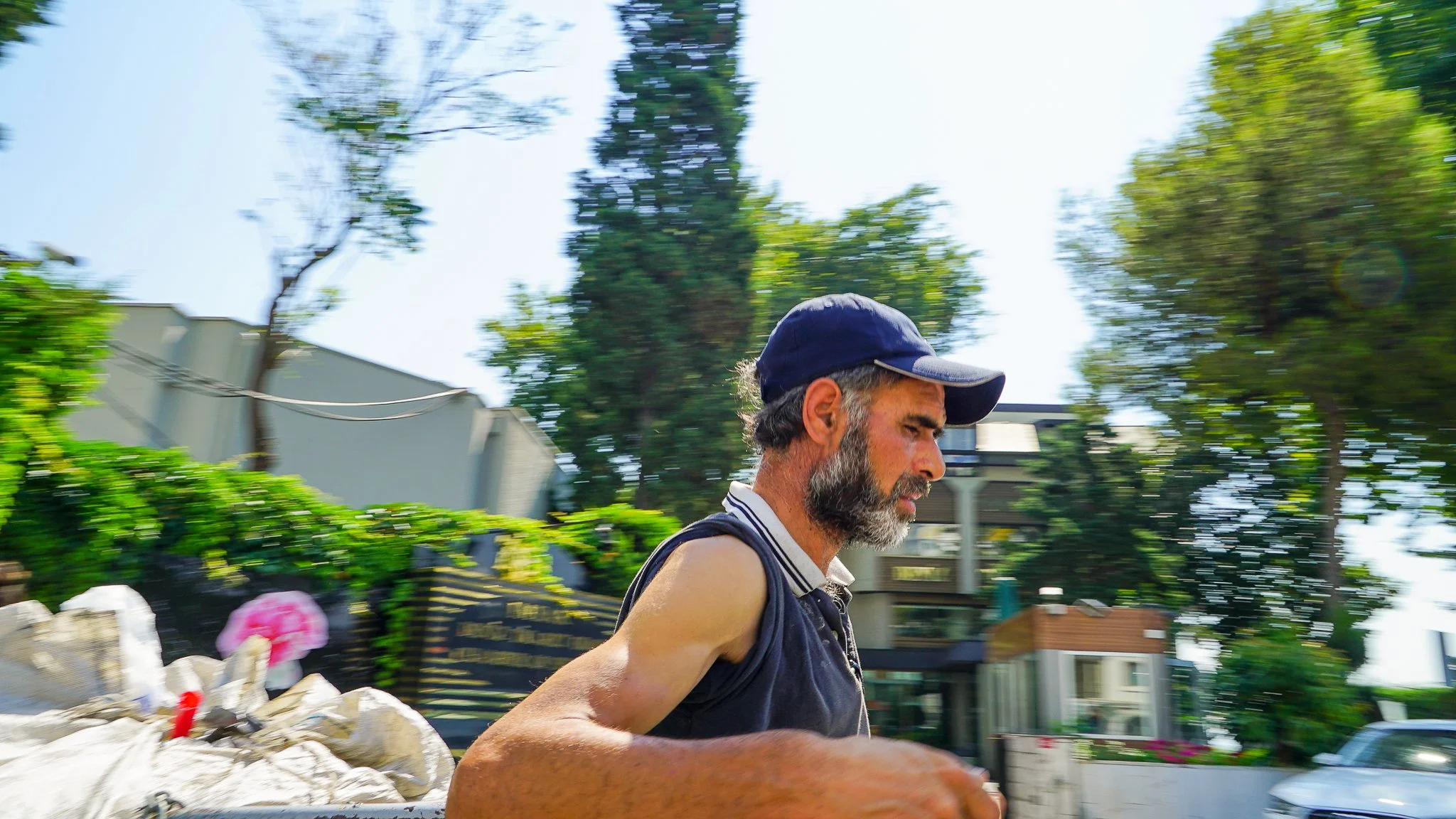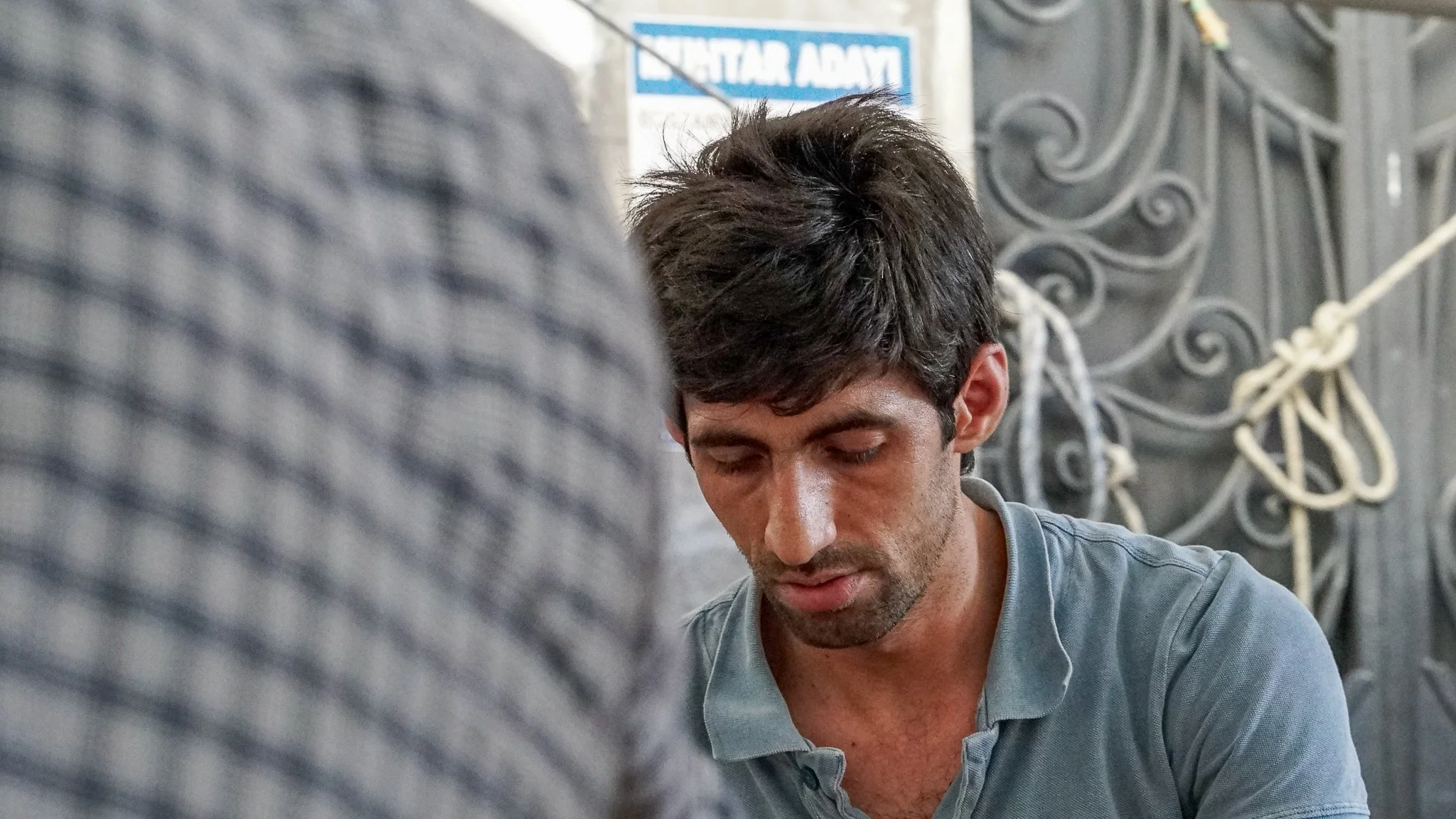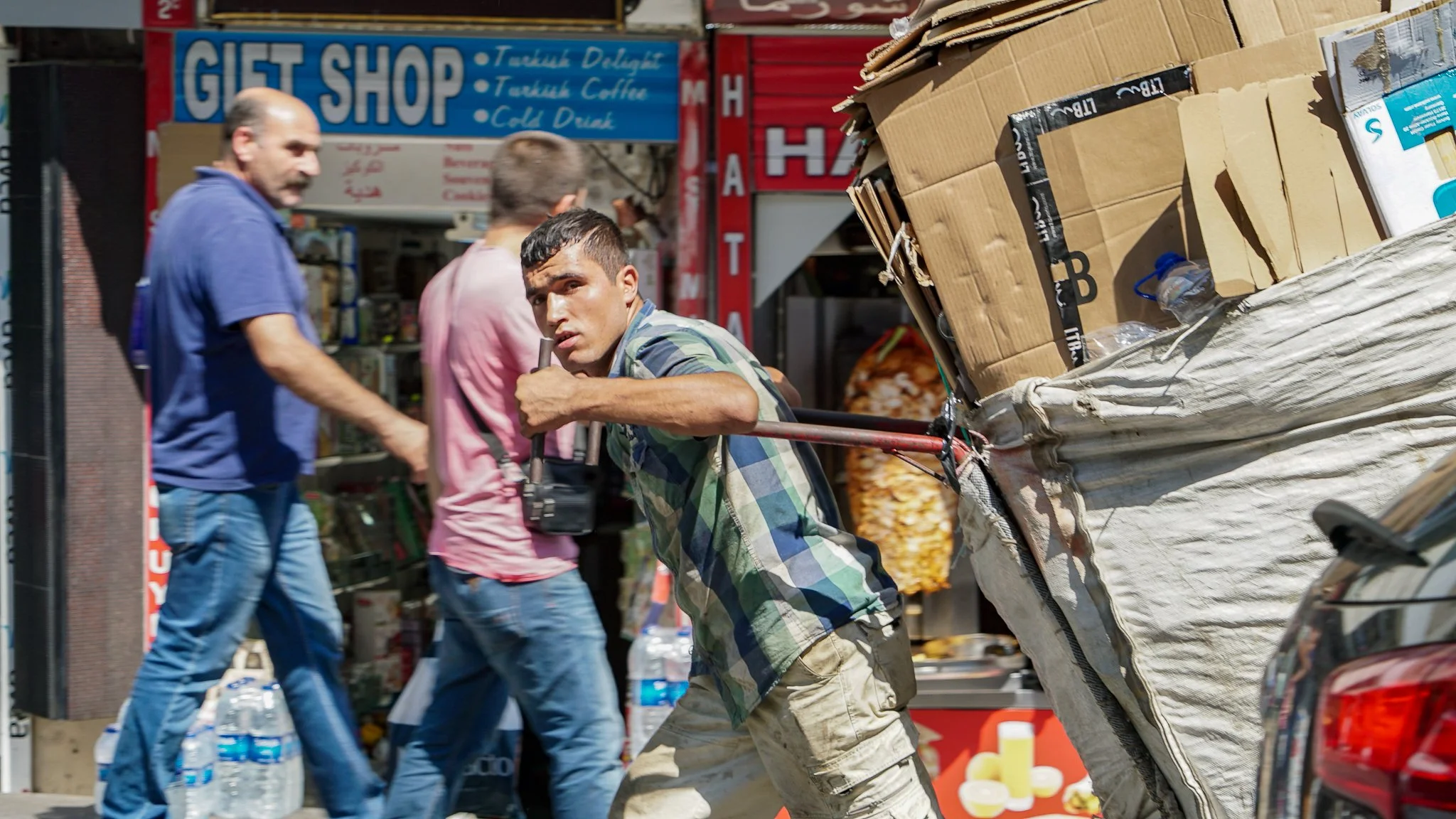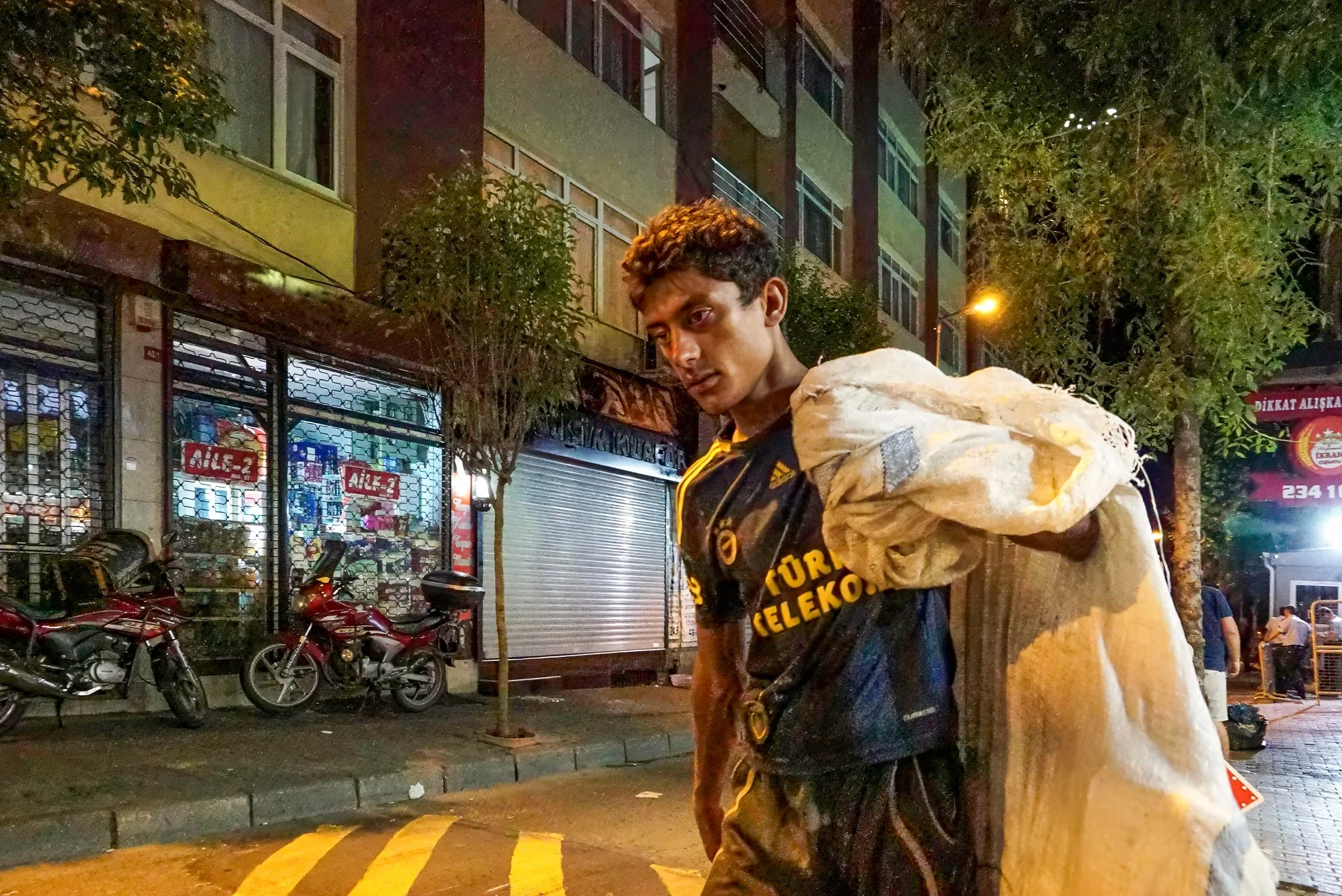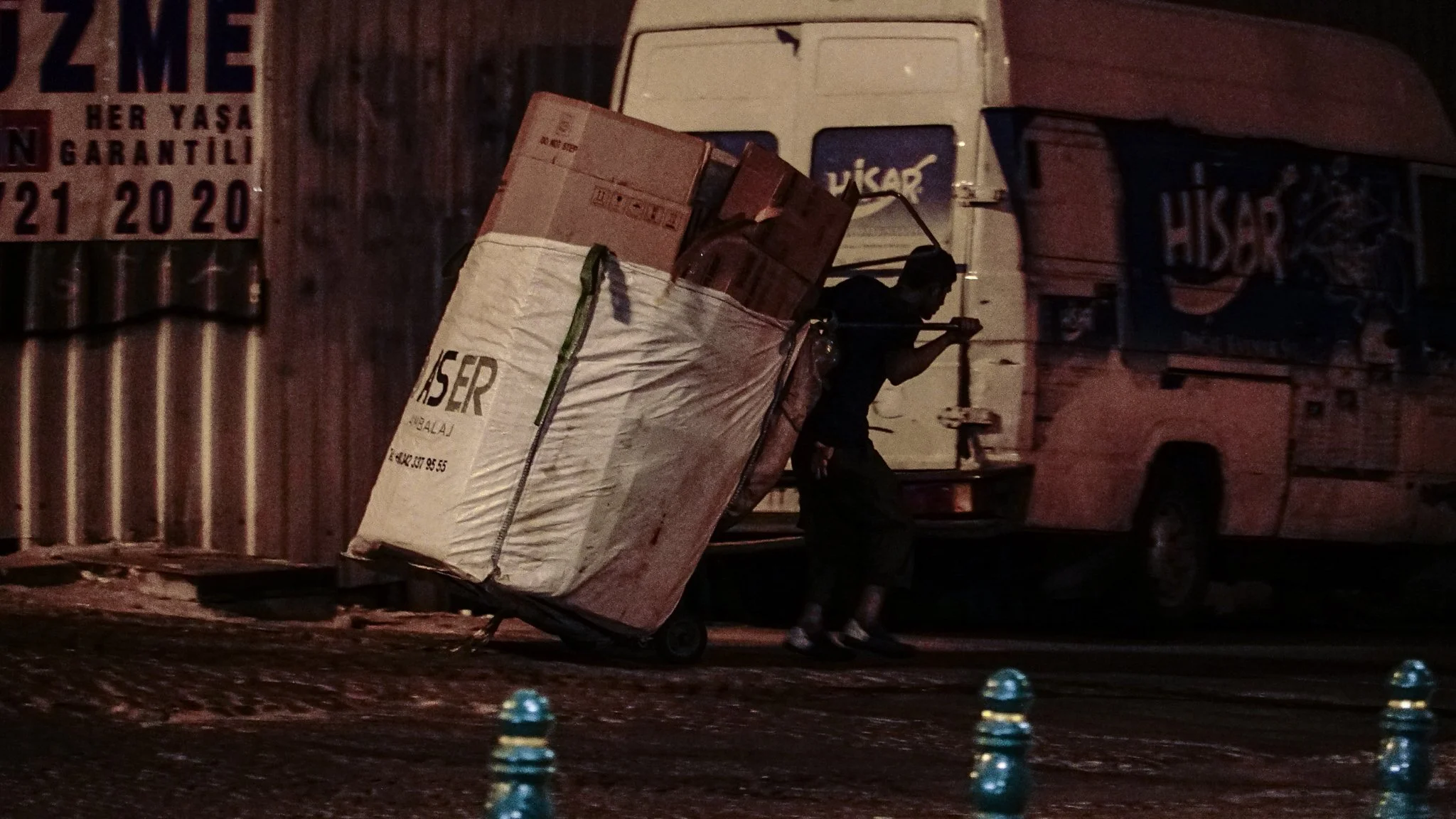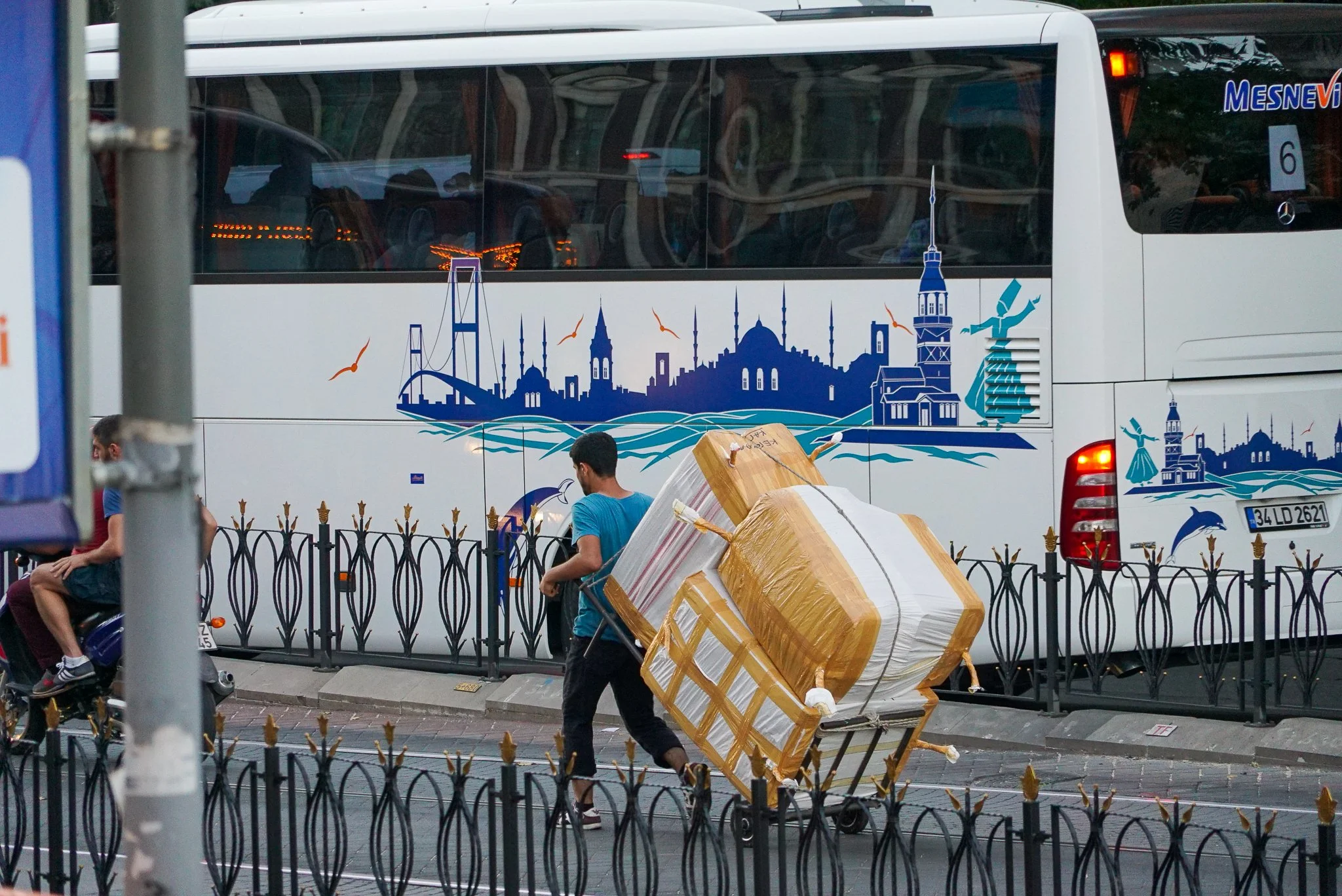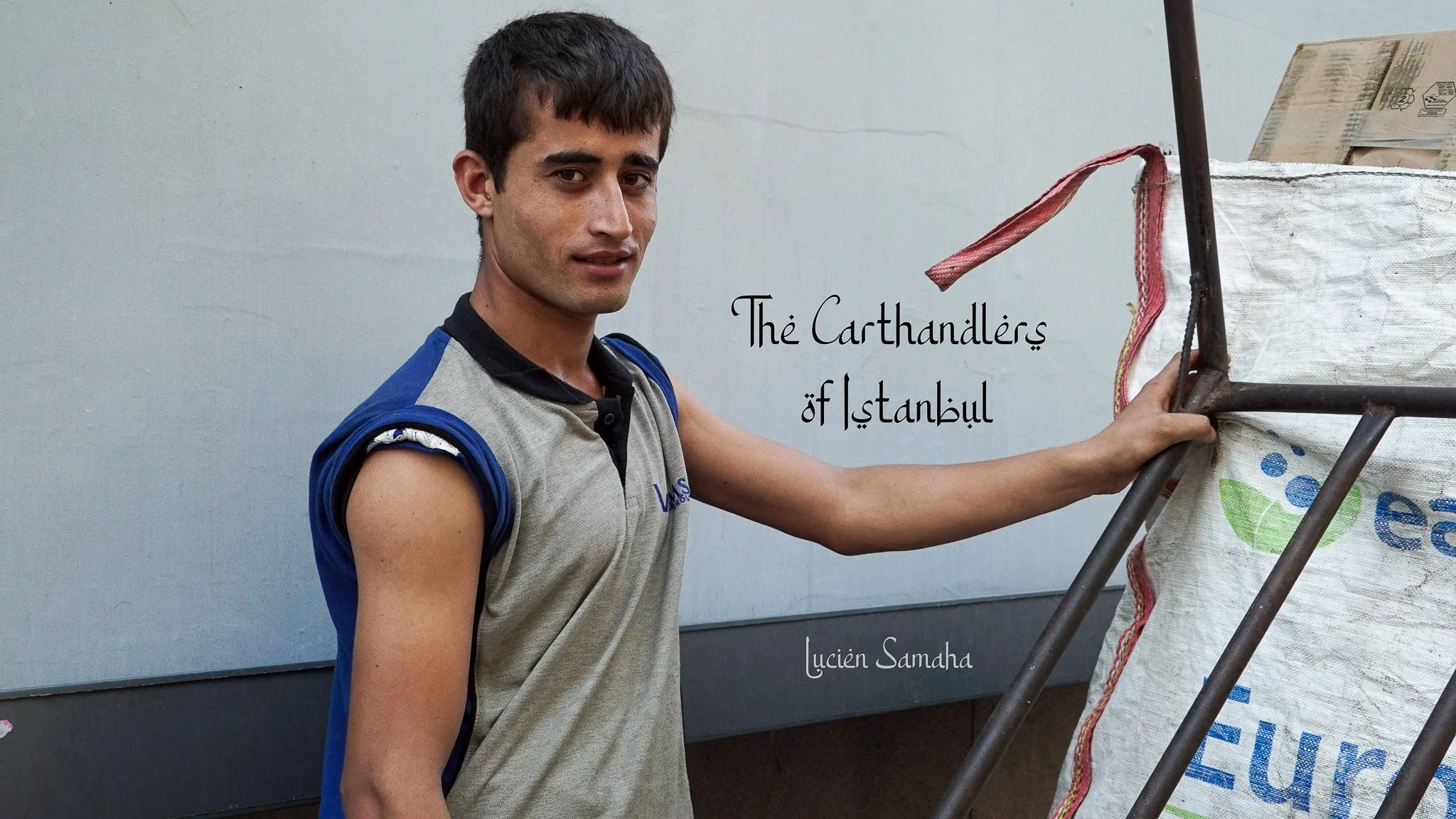
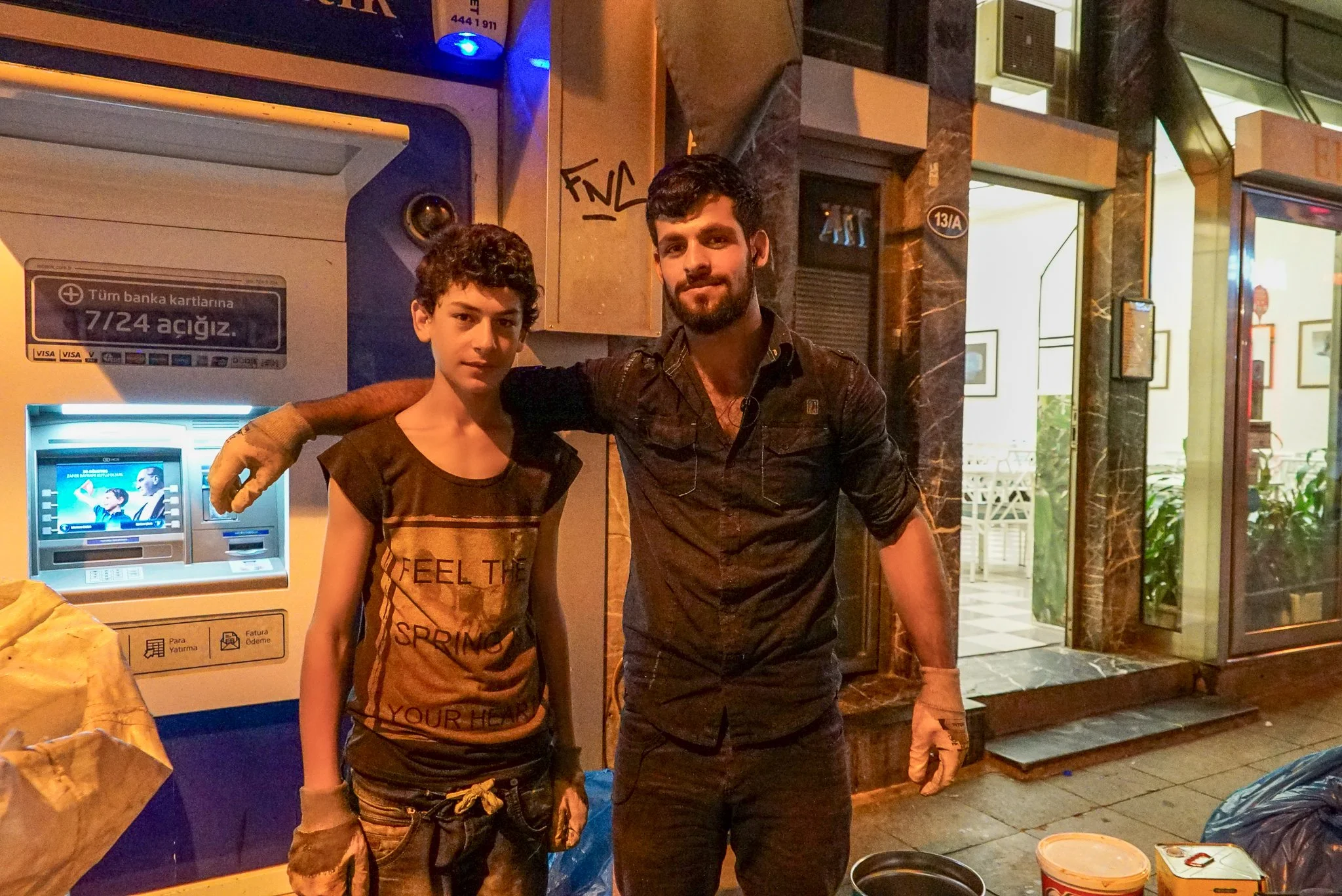
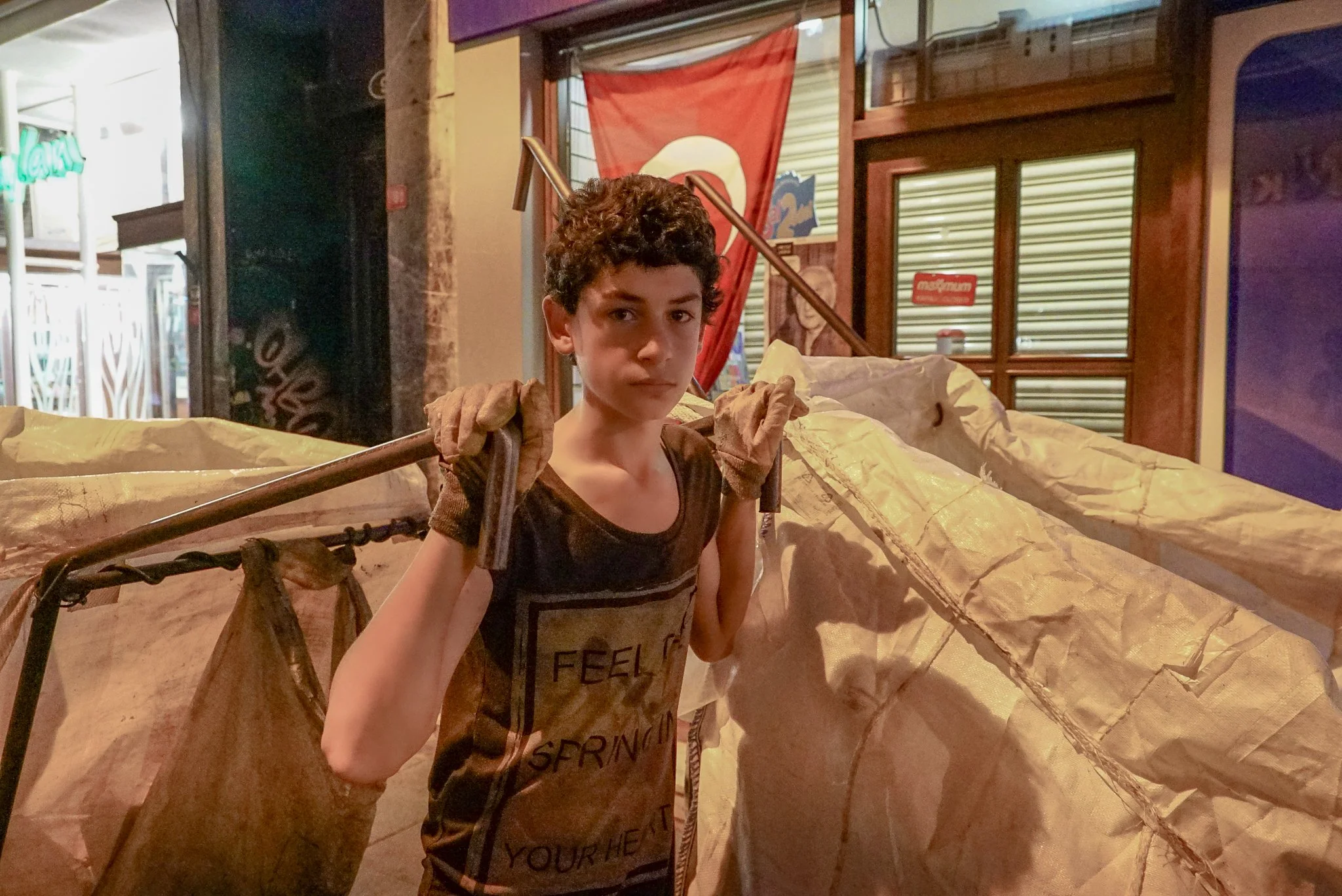
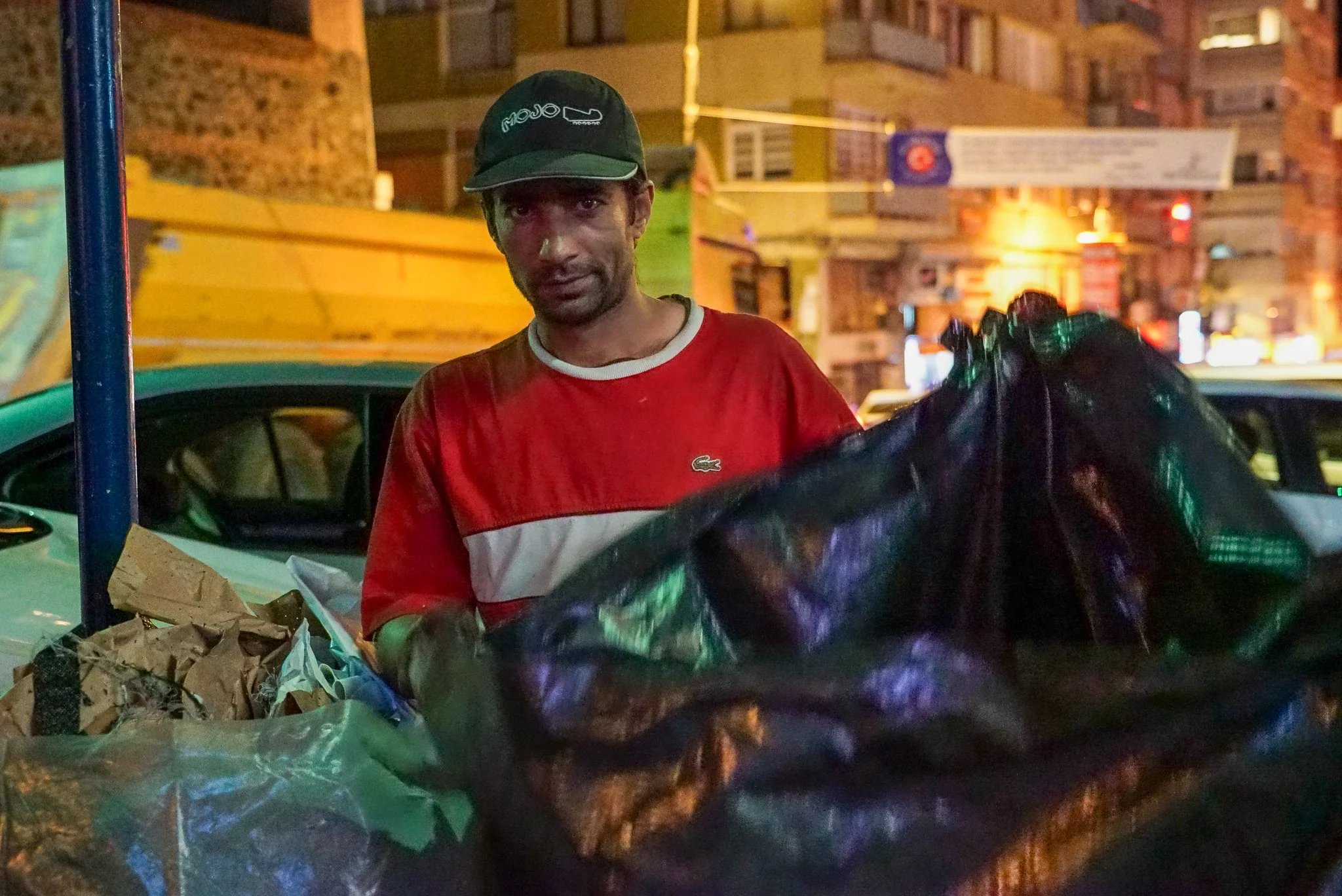
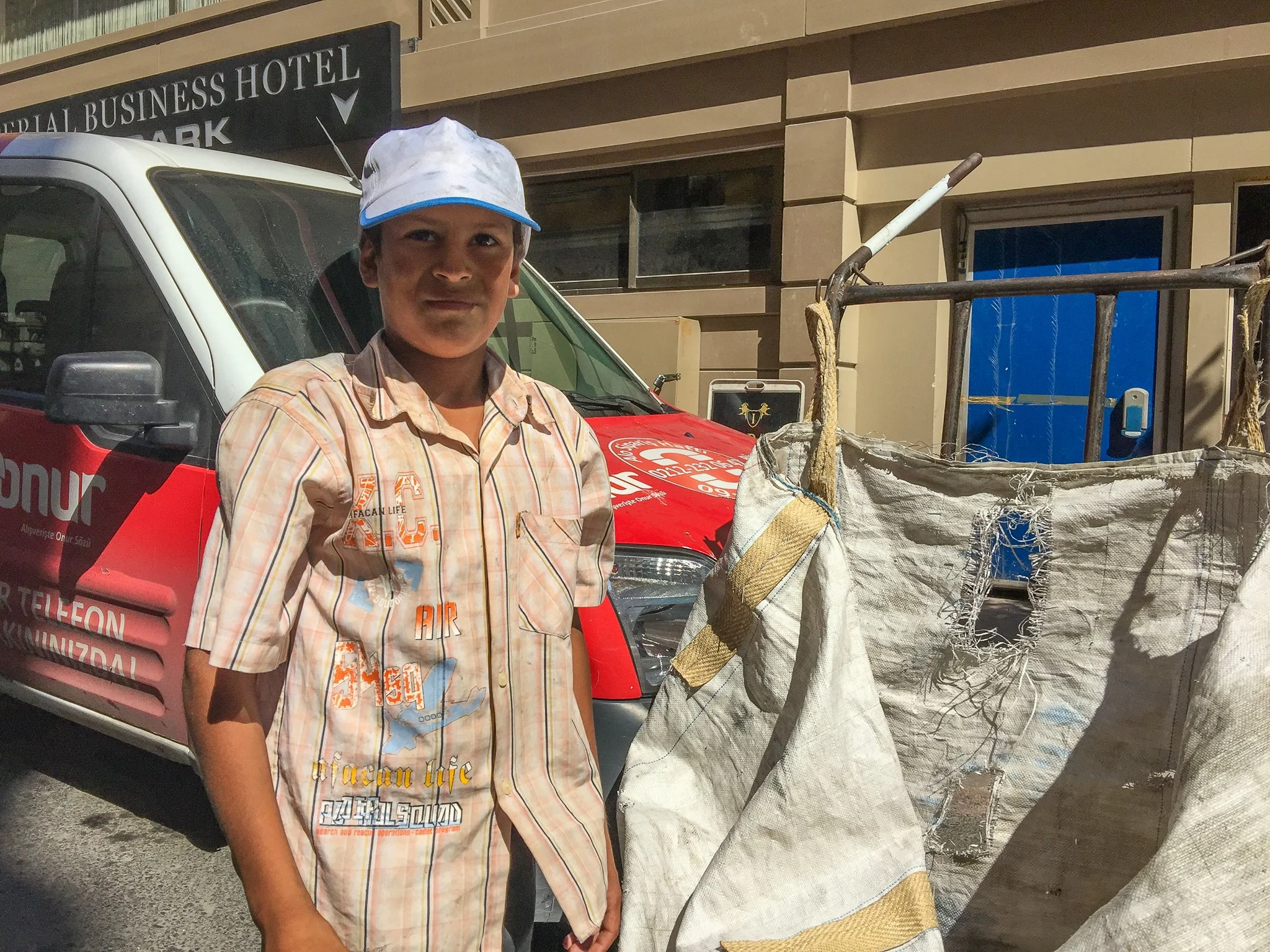
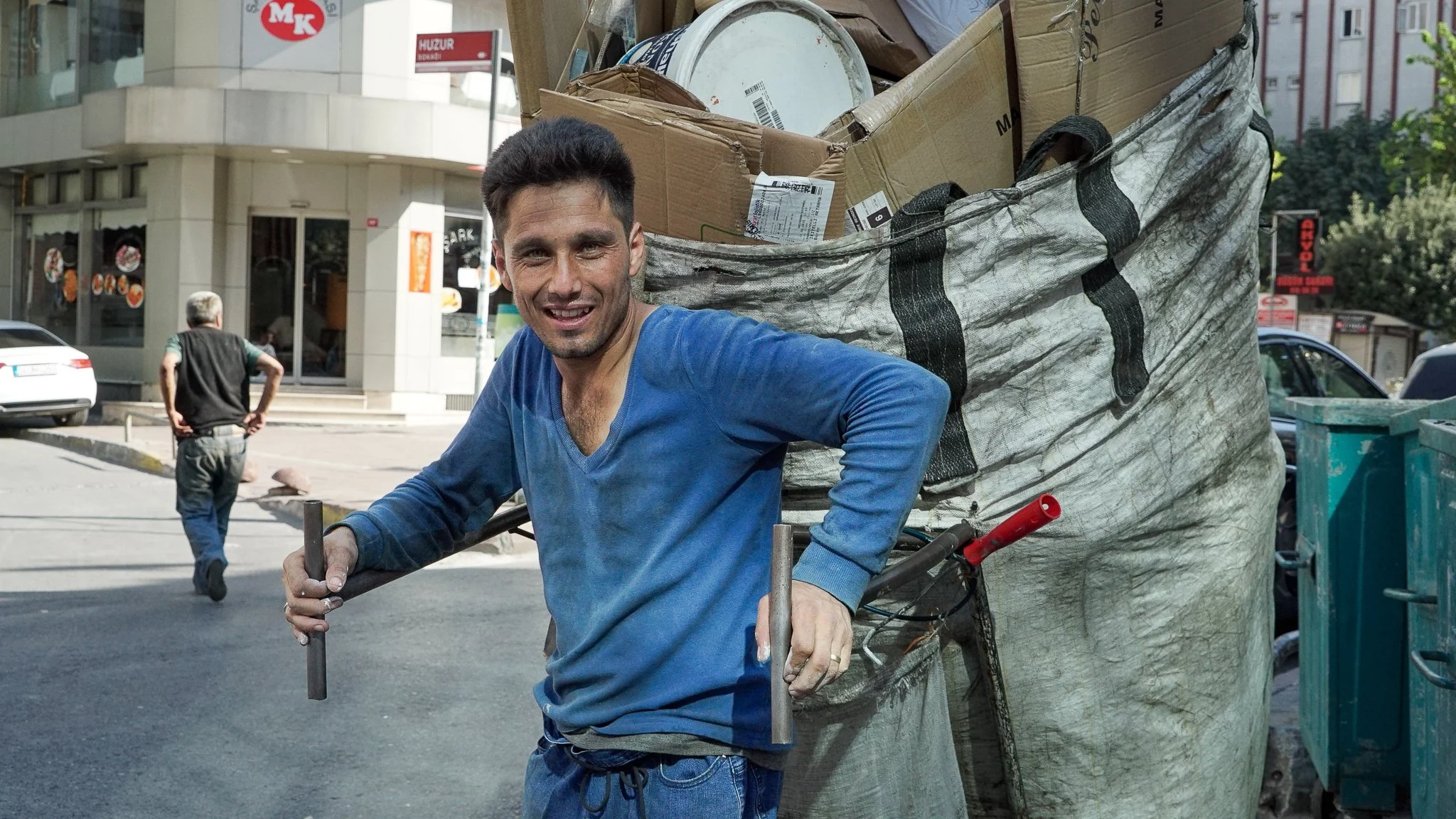
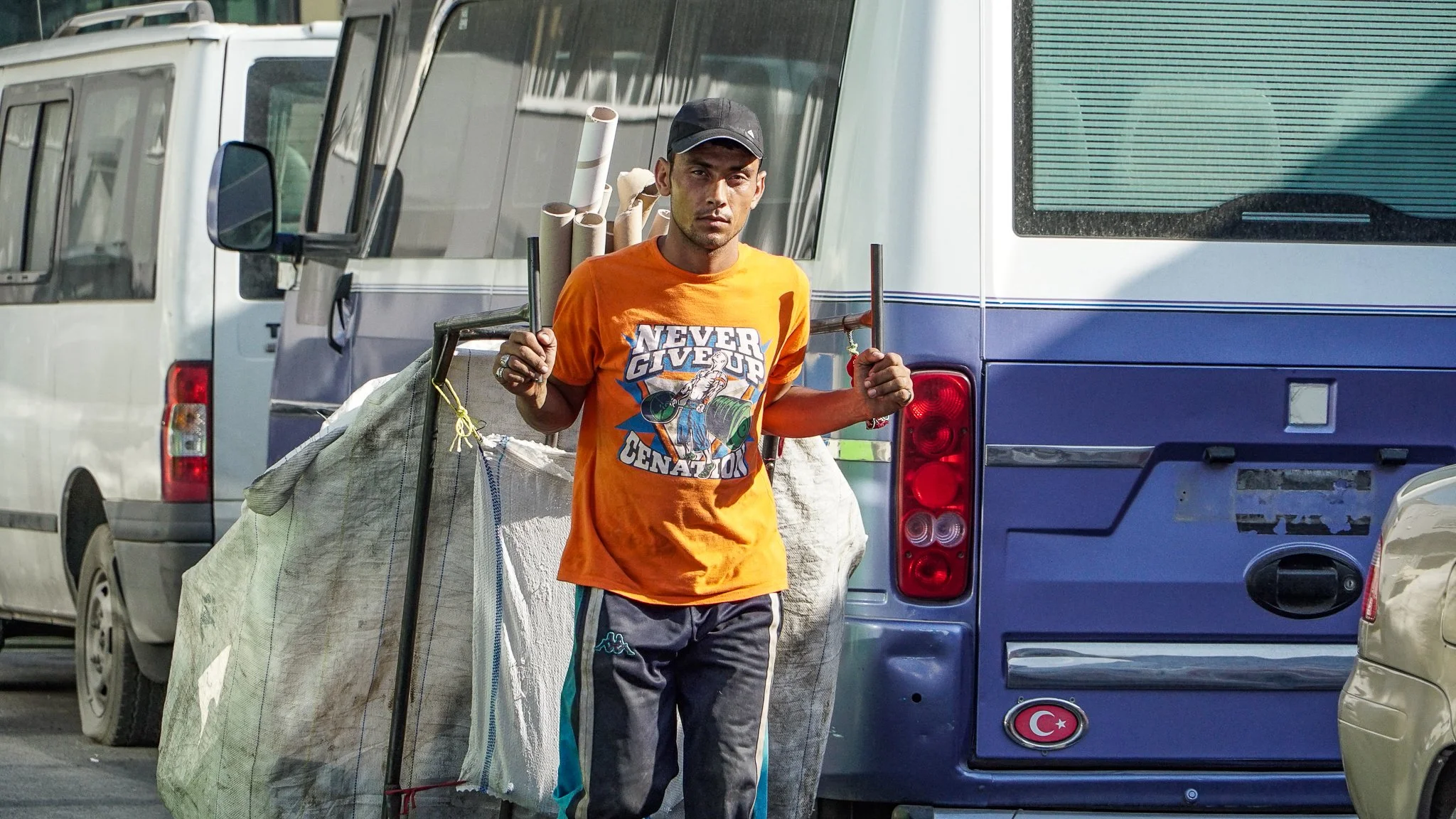
Istanbul has one of the most vibrant street life of any city I have visited, including well into the night with its cafes, bars and restaurants. In the one month I spent there in 2015, prowling the streets daily, photographing for several hours, I was struck by the ubiquity of what I referred to as ‘cartboys’ but which I eventually learned were officially called ‘Paper Collectors’ or 'kagit toplayicilar’ in Turkish.
I must admit I was seduced by their energy, but also empathized with their difficult and thankless job, maneuvering the busy streets and sidewalks of this metropolis, with steep hills as one of its major features; particularly as they have to dodge the heavy traffic, the throngs of citizens, and the tourists enjoying all the entertainment and commerce this amazing city has to offer. The contrast is stark.
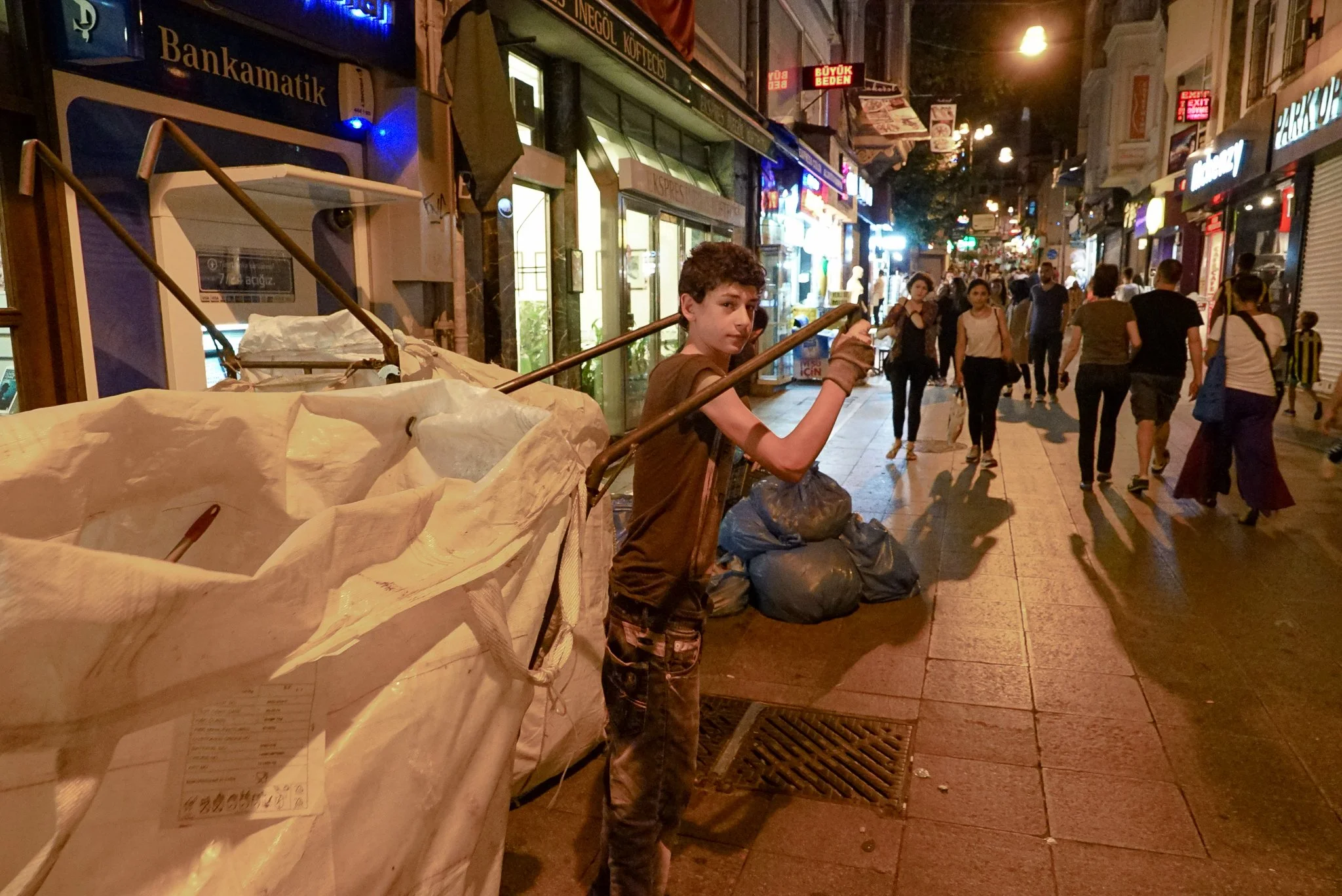
They are called paper collectors, but using the carts they have access to, they can expand their collecting and delivery services. The carts are owned by individual companies, which sometimes also provide housing and food, due to the absurd low incomes. In some cases up to 25 persons can live in a housing unit.
Recyclable, plastic and paper garbage is actually an international industry.
China is often the largest importer of such refuse, but has recently limited its imports, consequently redirecting the commerce to Malaysia, Poland, Vietnam and Thailand. But as these countries imposed their own restrictions and limits, Indonesia, India, and Turkey became the next recipients. Being closest to Europe, the latter exported not only their “valuable” waste to Turkey, but also hazardous and worthless refuse.
The Association of Street Waste Collectors’ motto is:
What we do is not a choice, it is our obligation, our obligation… No one wants to add to other people's waste. But our bread is clean, our hands are tired with labor.
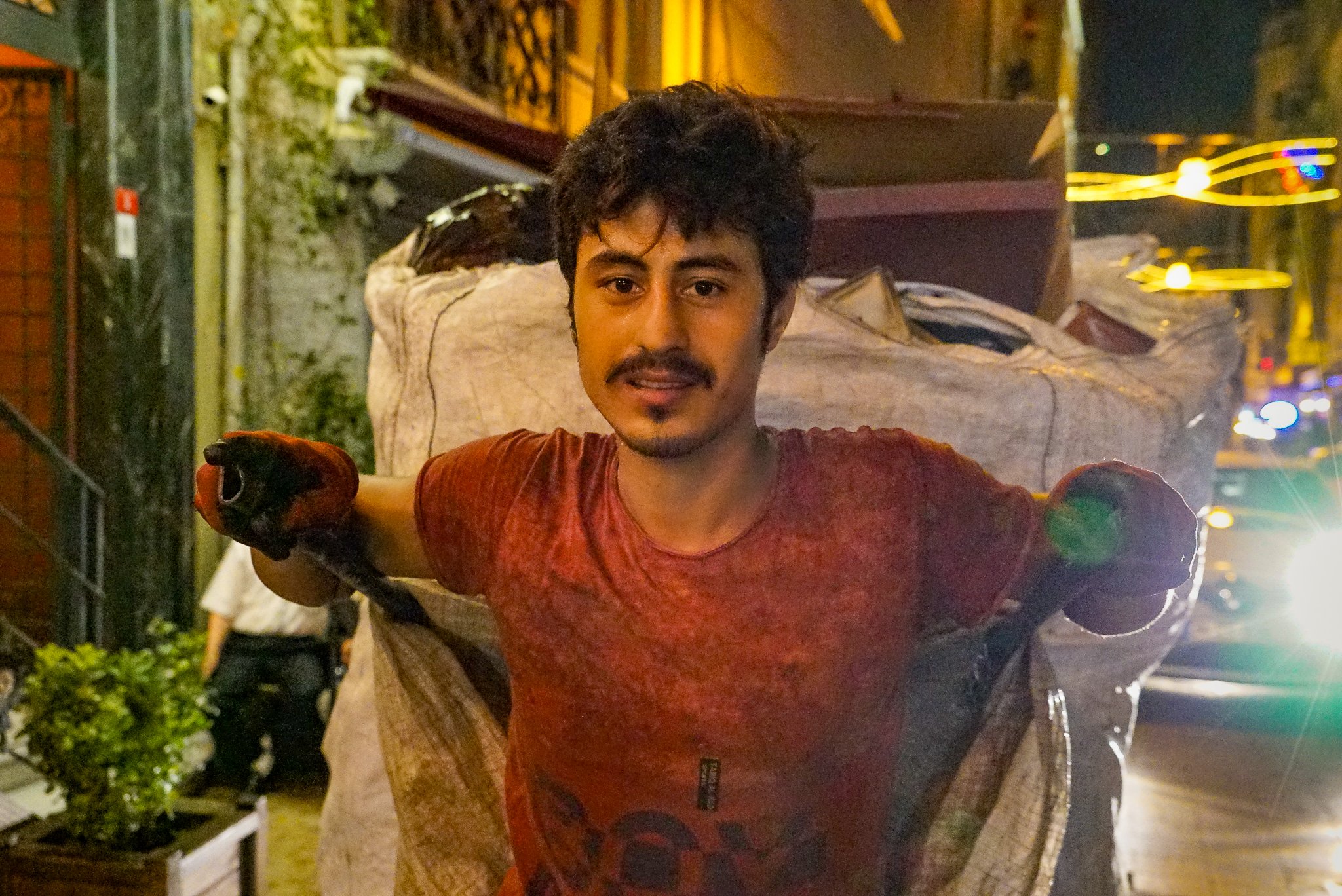
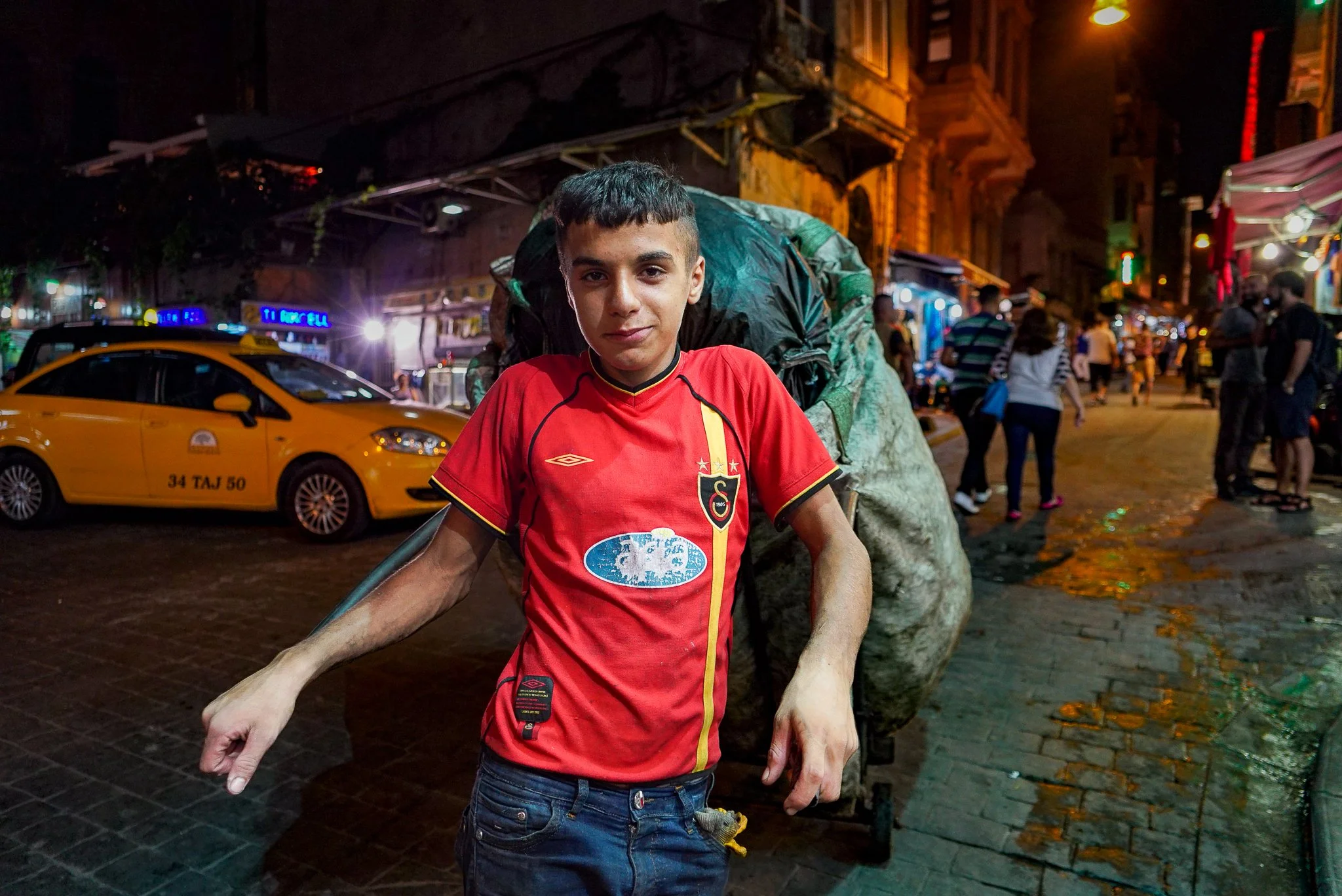
A Paper Collector working all day long well into the evening can collect about 100 kilograms or 225 pounds of waste and earns 100 Turkish Liras in return; that’s less than THREE DOLLARS.
For some these are second jobs, or jobs that they can do while going to school. Many municipalities have begun issuing and enforcing licenses. Children are supposed to be protected, but as you can see from the photographs, there is a significant percentage of child labor.